
Essential NVR Guide 2026: Learn How Network Video Recorders Work
By Techcom Engineering Pte. Ltd.
Published: January 29, 2026 at 11:23 am
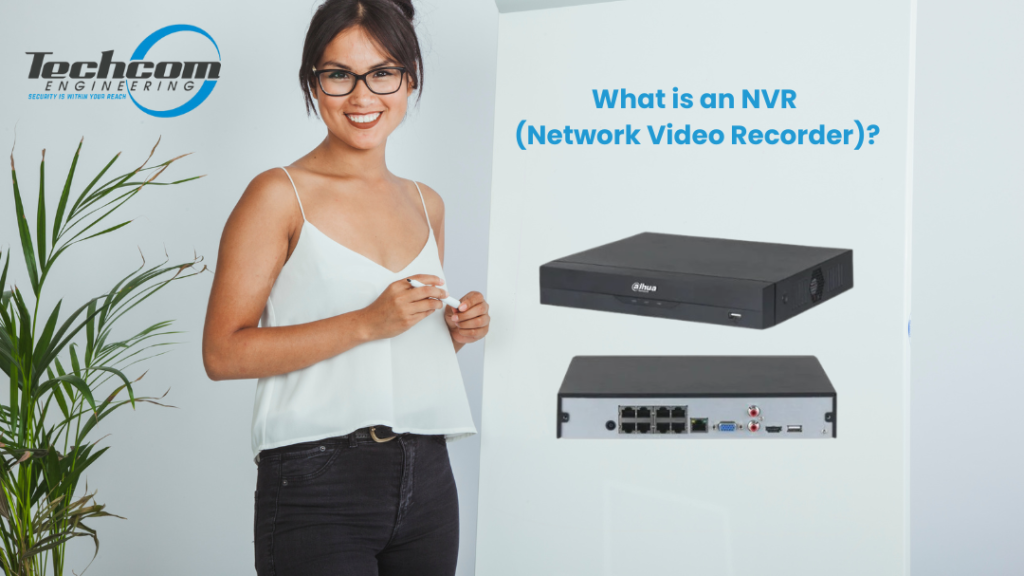
Not sure which CCTV camera or NVR you need? We can help you!
Discover our wide range of available CCTV cameras and NVR systems and let our experienced team guide you to the best solution for your space.
Please Reach out today for expert advice and a free quote.
If you are planning to install CCTV cameras for your home, office, shop, or warehouse, you will often hear the term NVR. Many people feel confused because it sounds technical — but in reality, an NVR (Network Video Recorder) is easy to understand once explained properly.
This guide explains what an NVR is, how it works, why it is important in modern security systems, and how it compares with older DVR systems — all in simple, non-technical language.
What Does NVR Mean?
NVR stands for Network Video Recorder.
An NVR is a device that records, stores, and manages video footage from IP cameras (network cameras). Instead of connecting cameras directly using old analog cables, the cameras send video through a computer network (LAN or internet) to the NVR.
Think of the NVR as the “brain” of your CCTV system:
• It receives video from all cameras
• It saves the recordings on a hard drive
• It lets you view live video and playback
• It manages camera settings and storage
Without an NVR, your IP cameras would not have centralized recording and monitoring.
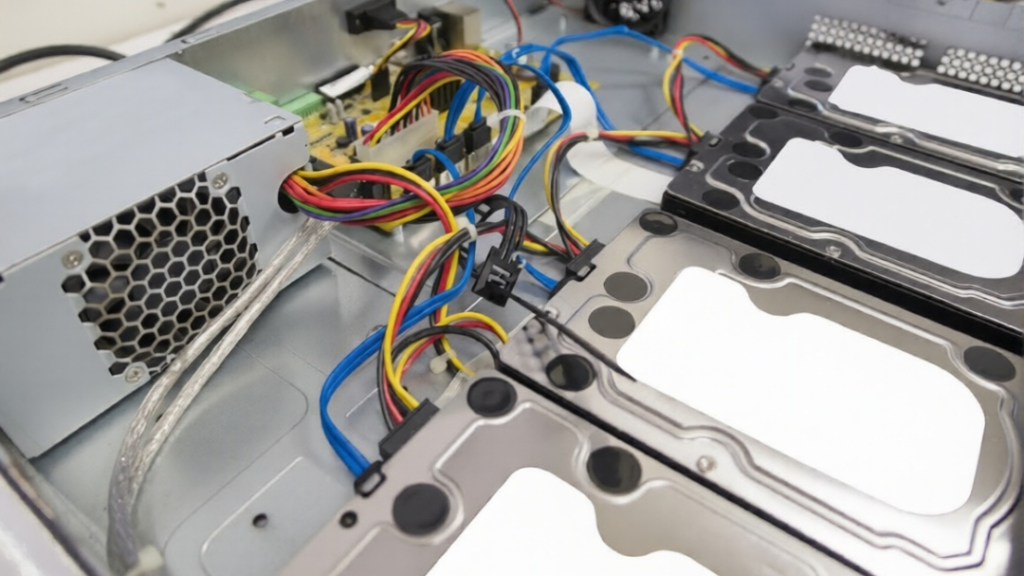
Need help choosing the right NVR for your CCTV system? Explore our full range of NVR products.
How Does an NVR Work in a CCTV System? (Simple Explanation)
1. IP Cameras Capture Video
The first step in an NVR-based CCTV system begins with the IP cameras themselves. These cameras capture live video of the area being monitored, converting the images into digital data. Unlike older analog cameras, IP cameras process the video at the source, which means the footage is already in a format that the NVR can understand. The cameras are responsible for seeing and capturing everything, but they rely on the NVR to store the video safely and manage it effectively. Essentially, the cameras “watch,” while the NVR “remembers.”
2. Video Is Sent Through the Network to the NVR
Once the video is captured, the IP cameras send it to the NVR over a network, typically using Ethernet cables or Wi-Fi. If the NVR has PoE (Power over Ethernet) ports, a single cable can deliver both power and video data, simplifying installation and reducing the number of cables required. The NVR acts as the central hub where all video streams from multiple cameras converge. This ensures that footage from every camera is organized and ready for recording, monitoring, and future playback.
3. The NVR Records and Stores the Video
After receiving the video streams, the NVR’s main task is to record and store the footage on its internal hard drive. It manages how recordings are saved, including scheduling, motion detection, and retention time. This allows users to review past events, export evidence, and maintain an organized archive. Without the NVR, cameras would capture video, but there would be no centralized system to store or manage it, making monitoring and security management difficult or impossible.
4. The NVR Displays and Manages the Video
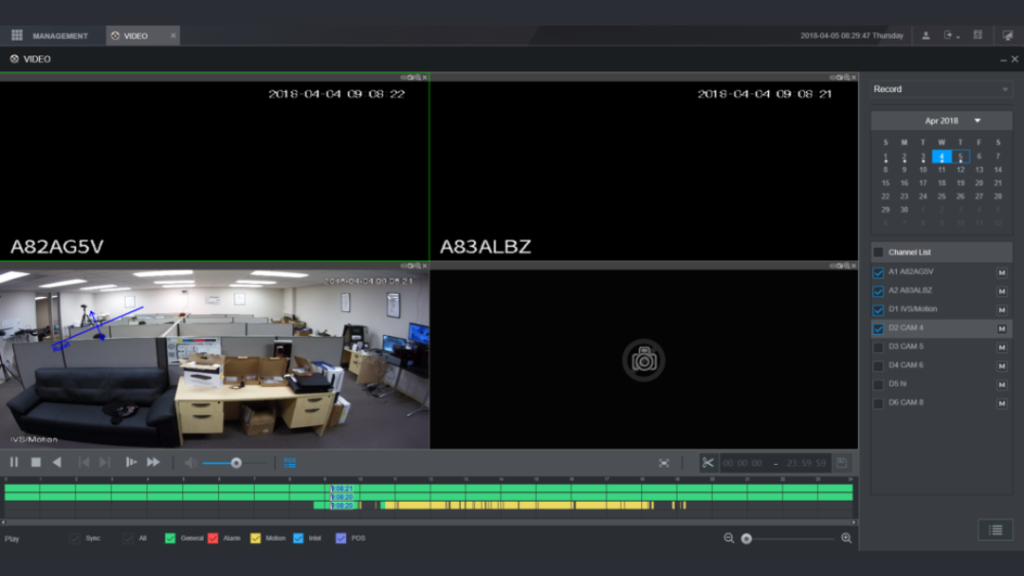
Finally, the NVR provides the interface that allows users to view live video, replay recordings, and configure camera settings. The video can be displayed on a monitor, accessed through a computer, or viewed remotely via a mobile app. Users interact with the entire CCTV system through the NVR, making it simple to control multiple cameras from one location. Essentially, the NVR turns raw video streams into usable security information, giving homeowners and businesses the ability to monitor their property efficiently.
In summary, an NVR is critical for modern CCTV systems because it records, stores, and manages all the video from IP cameras. While the cameras capture the images, the NVR ensures the footage is safe, organized, and easy to access whenever it is needed. Without an NVR, a CCTV system would lack centralized recording, making it much harder to monitor and secure your property. In simple terms: IP cameras see, and the NVR records and controls.
Ready to secure your property with reliable CCTV cameras? Browse our CCTV camera products and find the perfect match for your NVR system.
Key Features of an NVR System
Modern NVR (Network Video Recorder) systems offer powerful features that make them reliable and easy to use for homes and businesses. Each feature below explains what the NVR does and how it improves your CCTV system.
• Power over Ethernet (PoE)
Many NVRs come with built-in PoE ports, allowing a single network cable to deliver both power and video data between the camera and the NVR.
This means the camera does not need a separate power adapter, which reduces wiring, speeds up installation, and creates a cleaner setup. The NVR acts as the central connection point where cameras receive power and send video at the same time, making the system more stable and easier to maintain. This feature is widely used in offices, retail shops, warehouses, and commercial buildings.
• High-Resolution Video Support
An NVR supports high-definition IP cameras such as Full HD (1080p), 4MP, 5MP, 4K Ultra HD, and even 8K, depending on the model.
This means the NVR is capable of receiving, recording, and playing back clear video without losing quality. Higher resolution allows better identification of faces, license plates, and small details, which improves security monitoring and evidence quality.
• Scalable and Expandable
An NVR allows you to expand your CCTV system as your security needs grow.
You can add more cameras by connecting additional network switches or upgrading to a higher-channel NVR (for example, from 8 channels to 16 channels). The NVR controls how many cameras can be connected and managed, making it easy to scale the system without replacing all equipment.
This makes NVR systems suitable for both small installations and future expansion.
• Centralized Control
An NVR provides centralized control for the entire camera system from one interface.
Users can view all cameras on one screen, search recordings by date and time, back up important footage, configure camera settings, and access the system remotely using a mobile phone or computer. Instead of managing each camera separately, everything is controlled directly through the NVR, making daily operation simple even for non-technical users.
NVR vs DVR – What’s the Difference?
Many customers ask: Should I choose an NVR or DVR?
Here is the simple comparison:
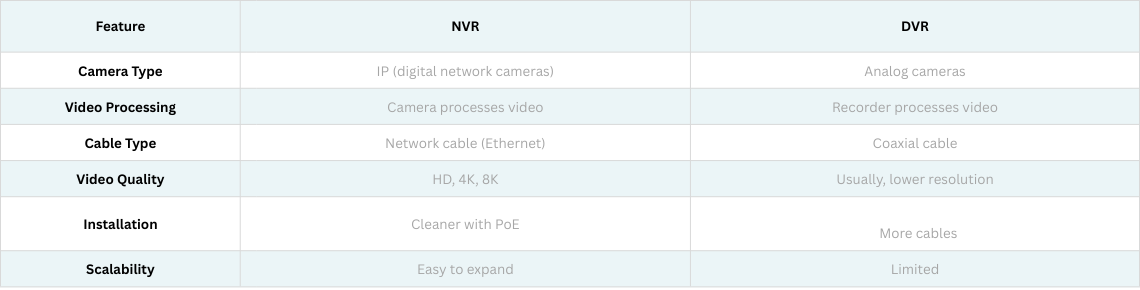
NVR systems are modern, flexible, and higher quality, while DVR systems are older and mostly used for legacy installations.
For new CCTV projects, NVR is strongly recommended.

Need to install your CCTV system the right way? Learn how to install CCTV cameras legally in Singapore with our step-by-step guide.
Read our article on How to Install CCTV Cameras Legally in Singapore.
Where Is an NVR Commonly Used?
An NVR-based CCTV system is highly versatile, making it suitable for almost any location that requires reliable video monitoring. Its combination of centralized recording, high-resolution support, and easy scalability gives it advantages over traditional analog CCTV systems, providing clearer images, simpler management, and greater flexibility.
• Homes and condominiums
In homes and condominiums, an NVR allows residents to monitor entrances, living areas, and common spaces in high definition. What sets it apart from standard CCTV setups is that all cameras connect to a single recorder, providing centralized storage and easy playback. Homeowners can view live feeds or past recordings on a mobile app or computer from anywhere, and high-resolution footage is stored securely for weeks. This combination of remote access, centralized control, and reliable storage ensures peace of mind and allows quick action if an incident occurs.
• Offices and corporate buildings
For offices and corporate buildings, an NVR system streamlines security management. Multiple cameras can be connected and monitored from a single interface, reducing the complexity of managing separate recorders or DVRs. The system supports high-definition recording for better identification of visitors or staff in restricted areas, and remote access allows security personnel to check the building in real time. Compared to traditional analog CCTV, an NVR provides faster setup, easier expansion, and clearer evidence in case of incidents.
• Retail shops and malls
In retail shops and malls, NVRs help prevent theft and monitor customer activity efficiently. High-resolution video allows managers to see small details, like faces or product handling, which can be difficult with older analog systems. The centralized recording system also makes it easier to retrieve and review footage quickly, reducing response time in security incidents. The plug-and-play nature of PoE-enabled NVRs simplifies installation even in spaces with many cameras, making it a practical solution for growing retail businesses.
• Warehouses and factories
For warehouses and factories, NVRs provide comprehensive coverage over large areas, ensuring inventory and equipment are monitored effectively. With scalability built in, additional cameras can be added as the facility expands, and the NVR’s centralized storage allows long-term recording of high-resolution footage. This makes it easier to investigate accidents or thefts, maintain safety standards, and reduce operational risk, advantages that basic CCTV systems or standalone cameras cannot fully provide.
• Schools and campuses
Schools and campuses benefit from NVRs through improved safety and centralized monitoring. Administrators can view live footage from multiple buildings and entrances on a single interface and quickly review past events if an issue arises. The ability to access the system remotely adds an extra layer of security during off-hours. Compared to traditional DVR-based CCTV, NVRs deliver clearer images, easier management, and better scalability for expanding educational facilities.
• Hotels and apartments
In hotels and apartment complexes, NVRs ensure security across lobbies, corridors, common areas, and entrances. Instead of relying on multiple DVRs or cameras with limited storage, an NVR provides centralized recording, making it easier to manage multiple cameras and retrieve footage when needed. High-resolution recording and remote access also allow staff or management to respond quickly to guest concerns or security incidents, increasing operational efficiency and safety.
• Car parks and outdoor areas
Finally, in car parks and outdoor areas, NVR systems provide high-quality coverage, even over wide or poorly lit spaces. Centralized recording allows multiple cameras to be monitored simultaneously, and high-resolution video ensures that vehicles, license plates, and individuals are clearly visible. Compared to standalone CCTV cameras or older analog systems, an NVR setup offers more reliable storage, easier system expansion, and remote monitoring capabilities, making it ideal for managing outdoor security.
In summary, anywhere reliable, high-resolution video monitoring is needed, an NVR CCTV system provides clear advantages over standard CCTV setups. Its centralized management, long-term storage, scalability, and remote access make it a modern, flexible, and efficient solution for homes, businesses, and large facilities alike.
Benefits of Using an NVR for CCTV
Using an NVR system in your CCTV setup provides a range of advantages that make it ideal for homes, offices, and large-scale enterprises. NVRs are designed to deliver high-resolution recording, centralized management, and easy scalability — features that set them apart from traditional CCTV systems. Below are the key benefits explained in detail.
• Clear High-Definition Video
An NVR supports high-resolution IP cameras, including Full HD, 4K, and even 8K in advanced systems. This ensures that footage is crisp and detailed, allowing you to clearly identify faces, license plates, or other important details. Unlike older analog CCTV systems, which often have lower quality recordings, an NVR captures every frame digitally, providing reliable evidence when it matters most.
• Easy Installation with Poe
Many modern NVRs come with Power over Ethernet (PoE) ports, which allow a single cable to deliver both power and video to the camera. This simplifies installation, reduces wiring complexity, and lowers setup costs. For homes or businesses with multiple cameras, PoE makes the system cleaner and faster to install, eliminating the need for separate power adapters for each camera.
• Remote Viewing on Mobile Phones and Computers
An NVR allows users to access live feeds and recorded footage from anywhere using a mobile app or computer. This feature gives homeowners and security personnel the ability to monitor their property in real time, even when off-site. Remote access is particularly valuable for large businesses or multi-location setups, where constant on-site monitoring would be difficult without an NVR.
• Reliable Recording and Storage
All footage from connected IP cameras is stored securely on the NVR’s internal hard drive. Many systems include options for motion-triggered recording, scheduled recording, and backup, ensuring important events are never lost. This centralized storage makes it easy to review footage, export evidence, and maintain an organized video archive — advantages that standalone cameras or older DVR systems cannot match.
• Simple Expansion for Future Cameras
NVRs are highly scalable. Most systems support multiple camera channels, and additional cameras can be added easily by upgrading to a higher-channel NVR or connecting extra network switches. This future-proof design allows your CCTV system to grow alongside your home, office, or business without requiring a full replacement of your existing setup.
• Professional-Grade Security Management
An NVR provides centralized control for the entire CCTV system. From monitoring live video and reviewing recordings to configuring camera settings and controlling user access, the NVR makes security management simple and efficient. Even non-technical users can operate the system effectively, giving homes and businesses a professional-grade security solution without the complexity of multiple recorders or systems.
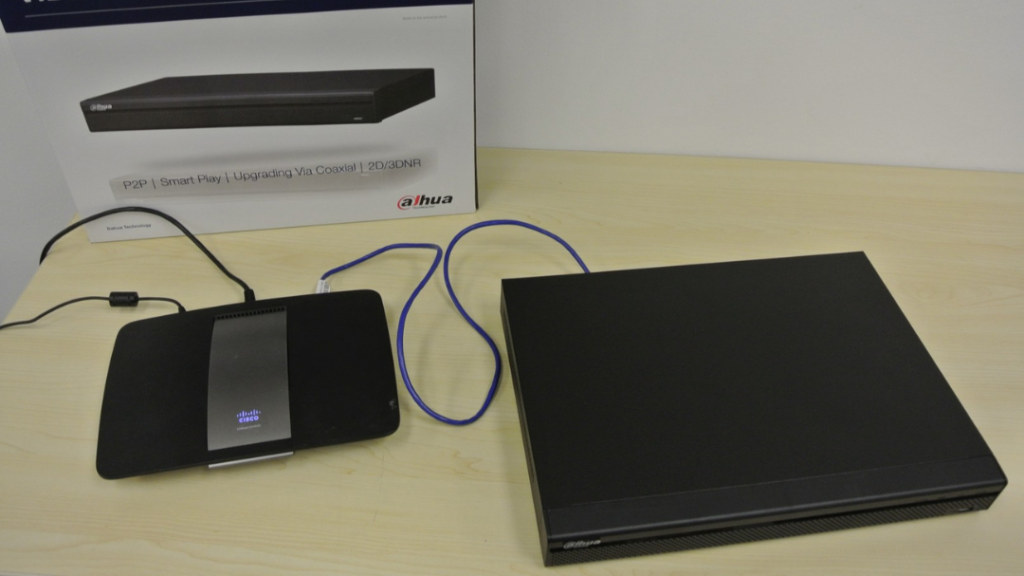
Not sure which NVR fits your security needs? Browse our complete range of NVR products and find the right solution for your CCTV system.
How to Choose the Right NVR?
Selecting the right NVR for your CCTV system is essential to ensure reliable recording, smooth operation, and future scalability. There are several factors to consider, and understanding why each one is important will help you make the best choice for your home, office, or business.
• Number of Cameras
The first factor to consider is how many cameras you plan to connect to your NVR. NVRs come in different channel sizes, such as 4-channel, 8-channel, or 16-channel models, which determine the number of cameras that can be managed simultaneously. Choosing an NVR with the right number of channels ensures all cameras can be monitored and recorded without overloading the system. For properties that may expand in the future, selecting a higher-channel NVR provides flexibility and allows you to add more cameras without replacing the entire recorder.
• Storage Capacity
Another important consideration is the NVR’s storage capacity, which determines how long video recordings can be retained. Larger storage allows longer retention of high-resolution footage, which is critical for reviewing past events or investigating incidents. Understanding your recording needs, including the number of cameras and expected resolution, helps you select an NVR with sufficient storage, so footage is always available when you need it.
• Poe Support
Many modern NVRs include built-in Power over Ethernet (Poe) ports, which supply both power and video to connected cameras through a single network cable. This simplifies installation, reduces wiring complexity, and lowers costs compared to systems that require separate power lines for each camera. For homes, offices, and larger facilities, Poe support makes setup faster, cleaner, and more efficient.
• Video Resolution Compatibility
It is essential to ensure that the NVR supports the resolution of your IP cameras, whether Full HD, 4K, or higher. A mismatch between the NVR and camera resolution can result in lower-quality recordings or limit the clarity of your video. Choosing an NVR that matches or exceeds your cameras’ resolution ensures sharp, detailed footage that can be relied upon for monitoring or evidence purposes.
• Remote Viewing Features
Many NVRs allow you to view live feeds and recorded footage remotely using a mobile app or computer. This feature adds convenience and peace of mind, allowing homeowners or security personnel to monitor the property in real time, even when away from the site. For businesses with multiple locations or security teams on the move, remote access ensures consistent monitoring without being tied to a single workstation.
• Brand Reliability and Warranty
Finally, the reputation of the NVR brand and the warranty offered are important factors to consider. Established brands often provide better performance, more reliable hardware, and responsive technical support. Investing in a reliable NVR ensures your CCTV system will function consistently over the long term and that any issues can be addressed quickly, minimizing downtime and protecting your investment.
A professional installer can also help determine the right NVR for your project, taking into account the number of cameras, storage needs, and site layout. This ensures your CCTV system operates efficiently and meets all your security requirements without unnecessary complications.
Frequently Asked Questions About NVR
1. What is an NVR in CCTV?
An NVR (Network Video Recorder) is a device that records and manages video footage from IP cameras over a network. It stores recordings and allows users to monitor, playback, and manage multiple cameras from one system.
2. What is the difference between NVR and DVR?
An NVR works with digital IP cameras and sends video over network cables, while a DVR works with analog cameras and processes video at the recorder. NVR systems offer higher resolution, easier installation, and better scalability.
3. Do NVR cameras need internet?
An NVR system does not require internet to record video locally. Internet is only needed if you want remote viewing on your mobile phone or computer.
4. How many cameras can an NVR support?
An NVR can support different numbers of cameras depending on the model, such as 4-channel, 8-channel, 16-channel, or more. Always choose an NVR with extra capacity for future expansion.
5. What does PoE mean in an NVR system?
PoE (Power over Ethernet) allows one network cable to supply both power and video data to the camera, making installation simpler and cleaner.
Conclusion: Why Choosing the Right NVR Matters?
The NVR (Network Video Recorder) is the backbone of any modern IP CCTV system. It records high-resolution video from multiple cameras, centralizes storage, simplifies system management, and allows you to monitor your property anytime using a computer or mobile device. Unlike older analog systems, an NVR captures sharper details, making it easier to identify faces, vehicles, and critical events when security matters most.
With advanced features such as PoE support, scalability, and remote access, an NVR makes installation cleaner, future expansion easier, and daily operation more efficient. Homeowners and businesses gain full control of their surveillance system without the complexity of multiple recorders or excessive cabling, ensuring long-term reliability and flexibility.
Choosing an NVR is not just a technical upgrade — it is an investment in dependable, future-ready security. Whether you are installing a new CCTV system or upgrading an existing one, selecting the right NVR ensures consistent performance, better protection, and peace of mind.
If you need professional guidance in selecting, supplying, and installing the right NVR and CCTV system, Techcom Engineering Pte Ltd is here to help. Our experienced team provides expert consultation, reliable products, and tailored security solutions for homes and businesses.
Hurry and Contact us today to get professional advice and a free quotation.


