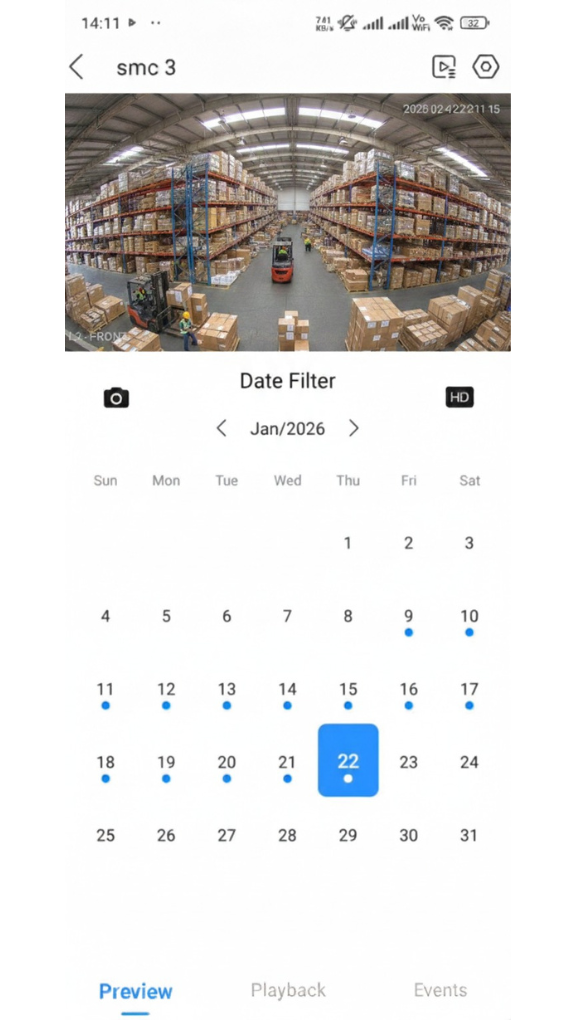
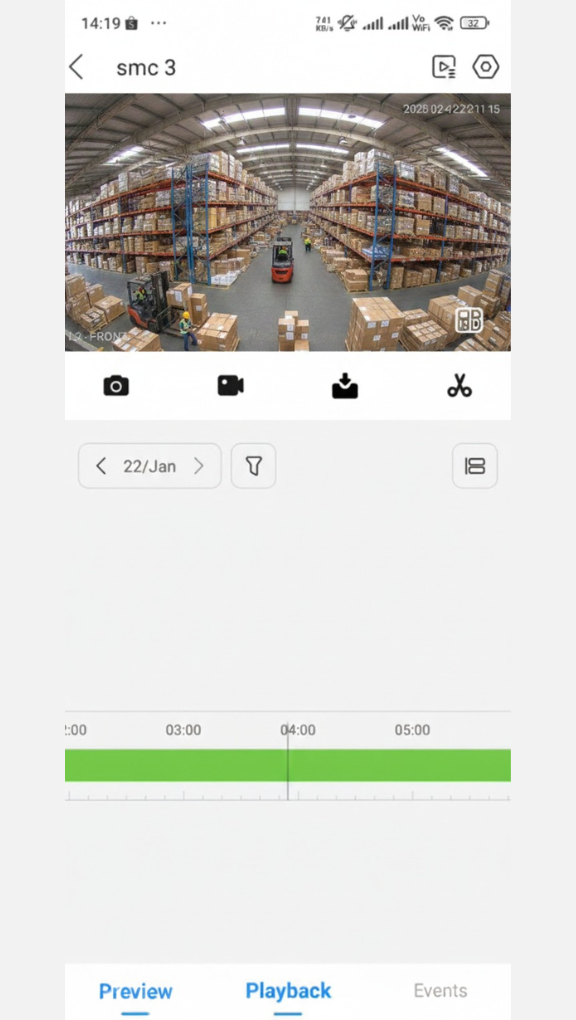
Commercial CCTV Singapore projects look simple on a quote: a set number of cameras, a recorder and some cabling. The decisions that matter most sit around the hardware. Where each camera looks, who can view the footage, what your landlord will approve, and how the system meets Singapore’s personal data rules all decide whether the system helps you after an incident.
This guide is for business owners, office and facilities managers, IT managers, retail tenants and fit-out teams planning a new system or upgrading an old one. It covers the legal basics, compares camera technologies, explains cabling and storage, and ends with a phased checklist you can hand to an installer.
The short version:
• The PDPA governs footage of identifiable people. You must notify, limit how you use it, secure it and avoid keeping it longer than needed.
• Anyone who installs or maintains CCTV as a paid service needs a Security Service Provider licence. Ask to see it.
• Analogue HD, IP and AI are not three rival product lines. AI is an analytics layer on top of the video system.
• Mall and building rules differ by landlord. Get the fit-out guidelines before you design.
• Cabling, PoE (Power over Ethernet) capacity, storage sizing and network security decide long-term reliability.
What a Commercial CCTV System Includes
A commercial system is more than cameras and a recorder. Each layer below affects cost, reliability and compliance, so each one should appear in your specification.
Component
Role
What to specify
Cameras
Capture video
Type, resolution, lens, night performance, housing for the environment
Recorder
Records and stores video. An NVR (network video recorder) handles IP cameras, and a DVR (digital video recorder) handles analogue HD cameras
Number of channels, supported camera types, storage capacity
Commercial CCTV Singapore: Legal and Regulatory Basics
When implementing a commercial CCTV Singapore project, business operators must navigate a complex web of compliance rules that should not be confused. These requirements vary wildly in their legal authority and their consequences for your business, making a clear understanding essential from the very start of your deployment. Misinterpreting where a rule falls can lead to costly project delays, strained property relationships, or severe statutory penalties.
The regulatory landscape for any commercial CCTV Singapore installation is built on three fundamentally distinct pillars. The highest tier consists of non-negotiable statutory laws, such as the Personal Data Protection Act, which carry heavy financial penalties for non-compliance. Below that are landlord conditions, which are contractual lease requirements imposed by building management that dictate your installation timelines and physical parameters. Finally, there are good practice standards, which are optional industry recommendations designed to secure your network and optimize camera longevity.
To help you cleanly separate these overlapping requirements and protect your business from compliance risks, the analytical matrix at the close of this section organizes each specific rule into its proper framework.
PDPA Duties for CCTV Footage
Under Singapore’s Personal Data Protection Act, any video recording that captures identifiable individuals qualifies strictly as personal data. A Ministry parliamentary reply explicitly confirms that organizations deploying a commercial CCTV Singapore system must clearly inform individuals of the specific reasons their data is being gathered. Businesses must secure explicit consent from the public unless a legal exception applies, and they are legally mandated to safeguard all captured video data using robust security infrastructure. To meet these expectations, the Personal Data Protection Commission provides detailed advisory guidelines, emphasizing the strategic deployment of visible notifications at building entry paths and key high-traffic vantage points so that individuals can easily read the terms before entering any active recording zone.
In operational practice, this requires a business to display highly visible signage at every single entry point of a monitored zone rather than simply relying on a lone sign at the main entrance of the property. The exact purpose for the surveillance, such as maintaining security and premises safety, must be explicitly stated on these signs, and the resulting footage must never be repurposed without a separate legal evaluation. For instance, using standard security video to track staff productivity constitutes an entirely different data processing purpose that demands its own independent compliance assessment. Furthermore, if a commercial CCTV Singapore infrastructure records audio logs alongside visual streams, the physical notices must explicitly declare that both audio and video are actively being captured, a requirement heavily backed by recent legal commentary on Singapore’s data protection frameworks.
Managing the internal operations of a commercial CCTV Singapore network also requires strict administrative control. Organizations must formalize strict access protocols defining exactly who is authorized to view live streams or review archived recordings, and management must maintain a flawless, auditable log of all data exports. To oversee these responsibilities, the law expects businesses to formally designate an accountable individual to spearhead data compliance, a role universally recognized as a Data Protection Officer.
The financial risks of mismanaging a commercial CCTV Singapore system are severe. The Personal Data Protection Commission holds authority to impose heavy financial penalties of up to one million dollars, or up to ten percent of an organization’s annual Singapore turnover if that turnover exceeds ten million dollars, utilizing whichever figure is higher. While the maximum fine is reserved for egregious breaches and the enforcement body carefully weighs the unique facts of every specific incident, these strict penalties emphasize just how seriously local regulatory authorities treat data negligence and poor video storage habits.
For detailed regulatory compliance guidelines and enforcement frameworks governing these security mandates, you can reference the official guidelines published by the PDPC or review the statutory penalty parameters detailed directly within the Personal Data Protection Act framework.
Video of identifiable people counts as personal data. The Ministry’s parliamentary reply states that organisations deploying a commercial CCTV Singapore system must tell individuals why their data is collected and obtain consent unless an exception applies, and must protect the data with reasonable security arrangements. PDPC’s advisory guidelines give good-practice examples for commercial CCTV Singapore operators, such as placing notices at building entry points or prominent spots where people can read them before being recorded.
In practice, that means you must put up clear signs at every single entrance to a monitored area, not only the main door of the property. You must state the purpose (for example, security and safety) on the signage and use the resulting footage only for that specific purpose. Using your commercial CCTV Singapore security footage to track staff productivity is a completely different purpose that needs its own independent assessment. You must also say so on the notice if the system records audio as well as video. Legal commentary on the guidelines notes that notices should explicitly indicate when both audio and video are recorded by the system.
Furthermore, you must decide who may view live and recorded footage, and keep a meticulous record of all exports. To manage this, you must assign a named person responsible for PDPA compliance, as the law expects organisations running a commercial CCTV Singapore setup to designate one, commonly called a Data Protection Officer.
The consequences of getting this wrong are real for any commercial CCTV Singapore owner. Since 1 October 2022, PDPC can impose financial penalties of up to S$1 million or, for organisations with Singapore turnover above S$10 million, 10% of that turnover, whichever is higher. PDPC weighs the facts of each case, so a maximum is not a typical outcome. However, it does show how seriously the law treats poor data handling in commercial CCTV Singapore operations.
Who May Install and Maintain CCTV
The Police Licensing and Regulatory Department strictly requires anyone providing commercial CCTV Singapore installation or maintenance as a service to hold a valid Security Service Provider licence under the Private Security Industry Act. Because that specific statement originally dates from a 2019 parliamentary reply, it is highly recommended to confirm the current administrative position directly with the Police Licensing and Regulatory Department if your particular business situation is unusual or complex.
The primary regulatory distinction rests entirely on the legal wording “as a service”. As a property or business owner, you must proactively ask any external installer for their official security licence details before signing any service agreements or finalizing a commercial CCTV Singapore contract. Additionally, you should double-check your legal standing with the regulatory authority if you plan to have internal, in-house staff install or service cameras directly at your own premises rather than outsourcing the project to a licensed vendor.
Is CCTV Mandatory?
We found no single overarching law that broadly requires every single business premises to deploy a surveillance system. However, specific contexts and niche operational environments do impose strict statutory duties regarding surveillance.
The clearest regulatory example is found in the construction sector. Since 1 June 2024, site occupiers are legally mandated to install a video surveillance system at construction worksites that carry a contract value of S$5 million and above, and the resulting footage must be securely stored for a minimum of 30 days from the date of recording. This specific infrastructure mandate is heavily aimed at monitoring high-risk work areas to actively improve worker safety on site. While a typical retail storefront or corporate office fit-out is highly unlikely to meet that high contract value threshold, a large-scale commercial project or complete building overhaul definitely may, making it crucial to verify the exact contract sum directly with your main contractor when establishing your commercial CCTV Singapore requirements.
Furthermore, it is important to note that highly licensed or specialized regulated venues may carry their own unique operational conditions regarding mandatory surveillance. For these distinct environments, you should always consult directly with your specific sector regulator to determine the precise compliance expectations for your commercial CCTV Singapore deployment.
Electrical Work
Cameras powered cleanly over network cables are one thing, but dealing with mains wiring is an entirely different matter. The Energy Market Authority (EMA) explicitly dictates that electrical work at homes and offices must be done or directly supervised by a Licensed Electrical Worker, a strict requirement that includes making structural wiring changes or adding new power points to the property. If your planned commercial CCTV Singapore project requires the installation of new power points to feed your recording units, network switches, or localized server equipment, you must factor this into your financial planning and explicitly budget for a licensed electrical worker.
Rules vs Practices at a Glance
Requirement
When it applies
Responsible party
Source
Type
Notify individuals, use footage for stated purposes, secure it
Any business CCTV capturing identifiable people
The organisation operating the system
PDPA and PDPC guidance
Statutory obligation; notice placement is guidance
Security Service Provider licence
CCTV installation or maintenance provided as a service
Installer
Police Licensing and Regulatory Department, under the Private Security Industry Act
Licensing requirement
Licensed Electrical Worker
New or modified electrical wiring, new power points
Electrical contractor
EMA
Statutory
Video surveillance system
Construction worksites with contract value of S$5 million or more
Worksite occupier
MOM
Statutory
Fit-out approvals, work hours, shopfront and ceiling rules
Leased mall or office units
Tenant and contractor
Landlord’s fit-out guidelines
Contractual; varies by property
Retention period for ordinary business CCTV
Most businesses
The organisation
PDPA retention principle
Business judgement. We found no fixed number of days
Separate network for cameras, unique admin accounts
Networked systems
Business and installer
Good practice
Recommendation
Choosing Between Analogue HD, IP and AI Cameras
This is where most buying confusion starts, because the labels describe different things. Analogue HD and IP describe how video travels. AI describes what the system does with it.
Option
Best suited to
Advantages
Limitations
Analogue HD (formats such as HD-TVI, AHD, HDCVI)
Upgrades where good coaxial cabling already exists; small sites
Can sometimes reuse existing coax; simpler network needs
Typically fewer advanced features than IP; capability depends on the format and recorder
IP cameras
New builds, multi-floor offices, multi-site companies
Video and often power over one network cable; scalable; wide range of resolutions and features
Needs network design, PoE capacity planning and cybersecurity attention
AI-enabled cameras or recorders
Sites that need alerts or search, such as after-hours intrusion or people counting
Can reduce manual footage review
Accuracy varies by product, lighting and camera position; may add licences or hardware requirements
Whether existing coax can be reused depends on its condition, length and the equipment chosen, so ask for a site survey rather than assuming.
What “AI CCTV” Means in Practice
Advanced analytics such as people or vehicle detection and specialized line-crossing alerts exist on many products today, but they are not included on all systems, and they often behave very differently depending on the brand. When evaluating these smart features for a commercial CCTV Singapore project, you should ask your vendor three critical questions.
First, you need to find out exactly where the analysis runs—whether it processes directly on the camera hardware, on the central recorder, or requires a completely separate analytics server. Second, you must clarify if there is an ongoing recurring licence fee tied to those smart features or if they are a one-time cost. Third, you should ask if the supplier can explicitly demonstrate the analytics’ tracking accuracy in an environment identical to yours, matching your specific layout and lighting levels.
Furthermore, any advanced analytics that actively identify specific individuals, such as automated facial recognition software, raise the regulatory privacy stakes considerably. Because facial recognition captures highly sensitive data, it is imperative to take professional PDPA compliance advice before enabling these tracking features on your commercial CCTV Singapore system to protect your business from major statutory risks.
Image Quality Is More Than Resolution
Higher camera resolution helps only when the rest of your physical hardware and structural setup adequately supports it. Environmental lighting, physical mounting height, visual viewing angle, specific lens choice, and the exact distance to the targeted subject all heavily shape your overall visual result. For instance, a security camera facing a bright, glass-covered storefront at midday will severely struggle with glare and shadows regardless of its high pixel count, making basic hardware specifications a poor indicator of performance for a commercial CCTV Singapore deployment.
To address these environmental glare challenges, some specialized cameras include wide dynamic range processing software to effectively cope with heavily backlit doorways or highly reflective surfaces, though actual software support varies wildly by hardware model. When finalizing equipment choices for your commercial CCTV Singapore infrastructure, you should always proactively ask your vendor for real sample footage from the proposed equipment model, ideally featuring clips recorded directly at your actual business entrance to verify true performance in real-world conditions.
Camera Placement for Retail and Office Sites
Placement should follow the layout and the incidents you need to review, not wherever a bracket fits.
Retail Outlets
• Entrances and exits: aim to capture faces at a usable angle, and check for glare from shopfront glass.
• Cash desk and service counters: cover the transaction area and the staff side.
• Aisles with tall shelving: low-angle blind spots are common, so plan around fixtures, not just the floor plan.
• Stockrooms and back-of-house: treat these as separate zones so incidents are easier to locate.
• Loading areas and rear exits: often overlooked and often the weakest point.
Offices
• Reception and visitor areas
• Lift lobbies and corridors
• Server and comms rooms: these deserve dedicated coverage.
• Emergency exits and car park access
Avoid pointing cameras at areas where people expect privacy, such as toilets or changing rooms. Keep any coverage of open-plan desks proportionate and clearly explained to staff.
Walk the premises with the current live views on a screen. Note every area that is dark, obstructed or too distant to identify anyone. Then decide whether repositioning, an added camera or a different camera type is the right fix. Replacing everything is rarely the first answer.
Network Cabling, PoE and Power for IP Systems
Cabling is the least visible part of the system and one of the hardest to change later, especially in a leased unit with finished ceilings.
How PoE Works and Why the Budget Matters
PoE lets one network cable carry both data and power. The standard determines how much power reaches the camera. 802.3af supplies up to 15.4W at the switch (about 12.95W at the device), 802.3at up to 30W (about 25.5W at the device), and 802.3bt Type 3 up to 60W, with Type 4 reaching roughly 90 to 100W. AMPCOM
Basic fixed cameras usually sit at the lower end. Pan-tilt-zoom cameras, cameras with heaters and some analytics models draw more.
Every switch also has a total PoE budget, which is often lower than the per-port maximum multiplied by the number of ports. Check the sum of your cameras’ draw against the switch total, and leave headroom for additions.
Cable Length and Quality
PoE lets one network cable carry both data and power. The standard determines how much power reaches the camera. 802.3af supplies up to 15.4W at the switch (about 12.95W at the device), 802.3at up to 30W (about 25.5W at the device), and 802.3bt Type 3 up to 60W, with Type 4 reaching roughly 90 to 100W. AMPCOM
Basic fixed cameras usually sit at the lower end. Pan-tilt-zoom cameras, cameras with heaters and some analytics models draw more.
Every switch also has a total PoE budget, which is often lower than the per-port maximum multiplied by the number of ports. Check the sum of your cameras’ draw against the switch total, and leave headroom for additions.
Power, Routes and Resilience
• Put the recorder and core switch on a UPS (uninterruptible power supply) so short outages don’t corrupt recordings.
• Keep camera traffic on a dedicated switch or separated network segment where possible.
• Confirm cable routes through ceiling voids, risers and fire-rated barriers with building management before pricing them.
• Keep as-built cable records. They save hours when a camera fails.
Storage and Footage Retention
Storage size depends on the number of cameras, resolution, frame rate, compression, and whether cameras record continuously or on motion. Ask your installer to show the calculation and its assumptions, not just a hard-drive capacity.
On how long to keep footage, the honest answer is that it depends on your purpose. We found no fixed number of days in the guidance we could access for ordinary business CCTV. The PDPA’s retention principle expects you not to keep personal data longer than you need for business or legal purposes.
Set a period you can justify, document it, and configure automatic overwriting. Extend retention only for specific footage tied to an incident, and record why. The 30-day figure that often appears in articles comes from MOM’s construction-site rule quoted above. It is not a general business standard.
Also test how quickly staff can find and export a clip. Footage you cannot retrieve on the day is of little use.
Cybersecurity for Networked CCTV
IP cameras are network devices, and attackers have used them before. The Cyber Security Agency of Singapore points to the 2016 Mirai botnet attack, which used everyday IoT devices such as home routers and IP cameras.
CSA’s Cybersecurity Labelling Scheme has been extended to consumer IoT devices including IP cameras. It was launched as a voluntary scheme. It is aimed at consumer products, so it will not always apply to commercial-grade equipment. Ask suppliers directly how they handle vulnerability disclosure and firmware updates
Good practice for any business system:
• Replace default passwords on every camera and recorder before handover.
• Give each user their own account with the minimum permissions they need, and remove leavers promptly.
• Avoid exposing recorders directly to the internet. Have IT approve a secured remote-access method such as a VPN.
• Keep firmware on a scheduled update process.
• Separate CCTV from the main office network where practical.
These are recommendations, not Singapore legal requirements. They support the PDPA duty to protect personal data with reasonable security arrangements.
Mall and Landlord Requirements for Retail Tenants
If you lease a mall unit or office, your landlord’s fit-out guidelines can affect CCTV design, timing and approvals. Fit-out approval follows a similar structure across most commercial buildings, but timelines and requirements vary by landlord.
Treat any landlord requirement as specific to that property. One published mall checklist, for example, says the landlord may revise its fitting-out guidelines at any time, sets normal fit-out hours that can be varied, and requires electrical diagrams to be endorsed by a licensed electrician. Your mall may differ, so request the current version for your unit.
Ask the landlord or management
Why it matters
May tenant cameras view the shopfront or mall concourse?
Coverage beyond your unit may be restricted and raises privacy questions
Which submissions and drawings are needed, and who must endorse them?
Missing documents delay approval and site access
What are the permitted work hours and delivery rules?
Ceiling work often falls in restricted or after-hours windows
Can cables use ceiling voids, risers or existing trunking?
Routes through shared or fire-rated areas may need approval
Are there approved contractor or consultant lists?
Some properties limit who may work in the unit
Are there rules on CCTV signage or shopfront appearance?
Signs and cameras must fit the shopfront design
What must be handed back (as-built drawings, test records)?
Handover documents are easier to collect during installation
Fit-out teams should also check whether the project’s contract sum brings it under MOM’s construction video surveillance rule described earlier.
Cost Factors in Commercial CCTV Singapore Projects
Reliable pricing depends on the site, so this guide does not quote figures. Prices vary widely with the following:
• Number and type of cameras, and whether analytics need extra licences.
• Recorder and storage size for your retention period.
• Cabling distance, ceiling access, and any after-hours work required by the landlord.
• Network switches, PoE capacity and UPS.
• Electrical work by a licensed electrical worker.
• Software, cloud or licence subscriptions.
• Ongoing maintenance and fault response.
Ask every installer for an itemised quote against the same specification. Otherwise a cheaper quote may simply exclude cabling, storage or maintenance.
When to Review an Existing System
A working system doesn’t automatically need replacing. Review it if you notice:
• Footage too unclear to identify people
• Areas with no useful coverage
• Frequent equipment faults
• Difficulty finding or exporting recordings
• Retention shorter than you intended
• Poor night visibility
• Cameras that no longer match a changed layout
• Equipment that is hard to support or repair
A review may point to repositioning, extra cameras or a recorder upgrade rather than a full replacement.
How to Choose a CCTV Installer in Singapore
Before you sign any service agreements or finalize your surveillance setup, ask your installer to meet these specific operational criteria:
• Show their Security Service Provider licence details to ensure full compliance with the Private Security Industry Act.
• Carry out a comprehensive site survey and provide a detailed camera schedule mapping out exact physical locations and intended coverage purposes.
• Give clear sample footage or provide a live hardware demonstration directly at the proposed camera positions.
• Provide the formal storage retention calculations, total PoE power budget, and exact network cable specifications.
• Explain their technical protocols for updating factory default credentials, managing firmware upgrades, and securing encrypted remote access.
• State all ongoing system maintenance terms and emergency fault response times clearly in writing.
• Deliver complete as-built technical drawings and conduct a formal handover test upon project completion.
The engineering team at cctvcamera.sg supports businesses across the region with professional commercial CCTV Singapore installation, deploying advanced AI, IP, and high-definition camera systems alongside structured network cabling. Our technicians seamlessly integrate surveillance setups with your existing door access systems and alarm panels to form a unified security infrastructure.
A professional on-site survey is always the most practical first step, because almost all hardware configurations and placement decisions depend entirely on the unique layout of your premises. To book a consultation for your property, visit our Contact Us page to speak with our certified installation team today.
Dahua DMSS is a powerful mobile surveillance app designed for seamless remote security management. With DMSS, users can enjoy real-time remote monitoring, smooth video playback, instant push notifications, device initialization, and full remote configuration — all from a single interface. The Dahua DMSS app supports a wide range of Dahua devices, including access controllers, alarm hubs, video doorbells, NVRs, XVRs, VTO intercoms, and IP cameras. Once logged into your DMSS Dahua account, you can also access cloud services such as cloud upgrades, ensuring your system stays secure, updated, and performing at its best.
Step 1: Download the Dahua DMSS app from the App Store (iPhone) or Google Play Store (Android).
First, download the Dahua DMSS app. If you are using an iPhone, go to the App Store. If you are using an Android phone, go to the Google Play Store.
Step 2: Open the DMSS app and select your country or region.
After installing the Dahua DMSS app, tap the app to open it. You will be prompted to choose your Region. Simply select the country where you currently live. This helps the app connect your Dahua device more smoothly using the P2P network. Don’t worry — if you move to another country in the future, you can change this setting anytime in the app.
Step 3: Log in or sign up for a DMSS account.
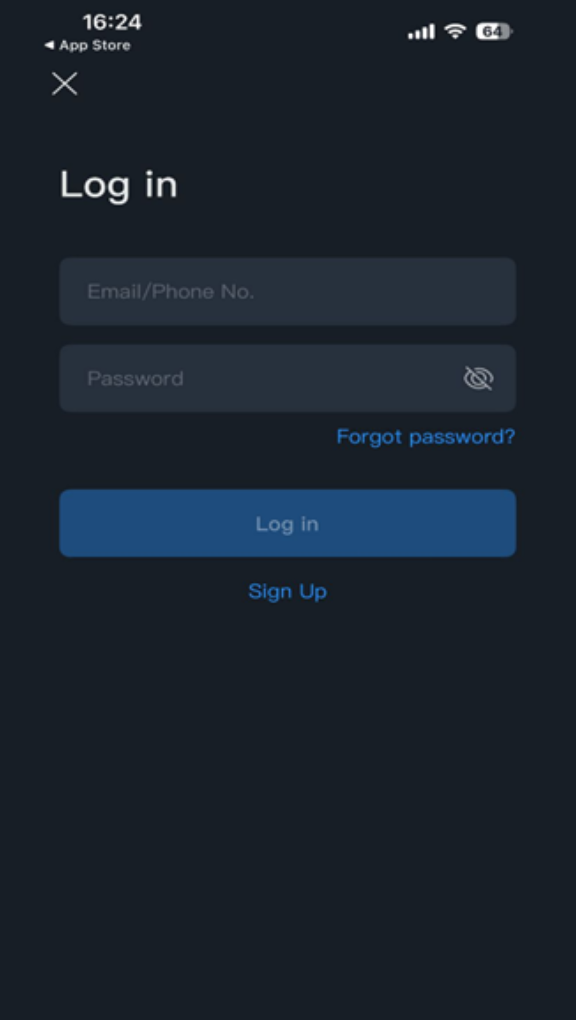
If you already have a DMSS account, tap Login and enter your email or mobile number and password to sign in. If this is your first time using the app, tap Sign Up or Register to create a new account, then follow the on-screen instructions to complete your registration.
Once you’re logged in, you can proceed to add your Dahua device and start using the app.
Step 4: Add your Dahua device to the DMSS app.
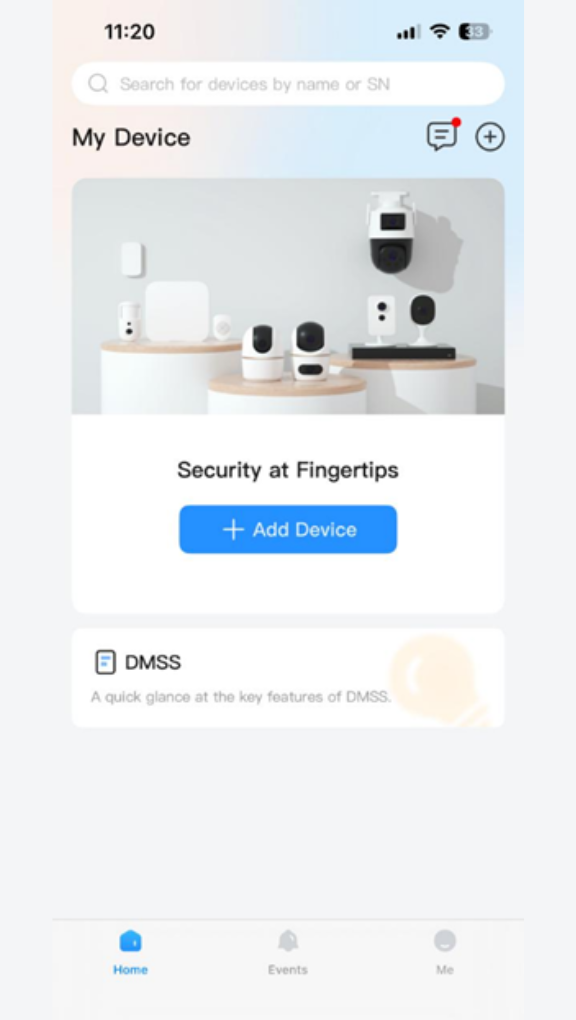
Once you’ve logged in to the DMSS app, the next step is to add your Dahua device so you can start monitoring it. To do this, refer to the image below and tap the “+” icon at the top-right corner of the screen, or click the + Add Device button in the middle of the screen to begin adding a new device.
You will then see several options for adding your Dahua device, including SN / Scan (QR Code), IP / Domain, or Online Search. Choose the method that works best for your installation or follow the instructions provided by your installer or device supplier.
If you purchased your Dahua IP camera, XVR, NVR, or HDCVI camera from us and are unsure which method to use, don’t worry — feel free to contact us for assistance, and we’ll be happy to guide you through the setup.
Step 5: Add your Dahua device by QR Code Scan.
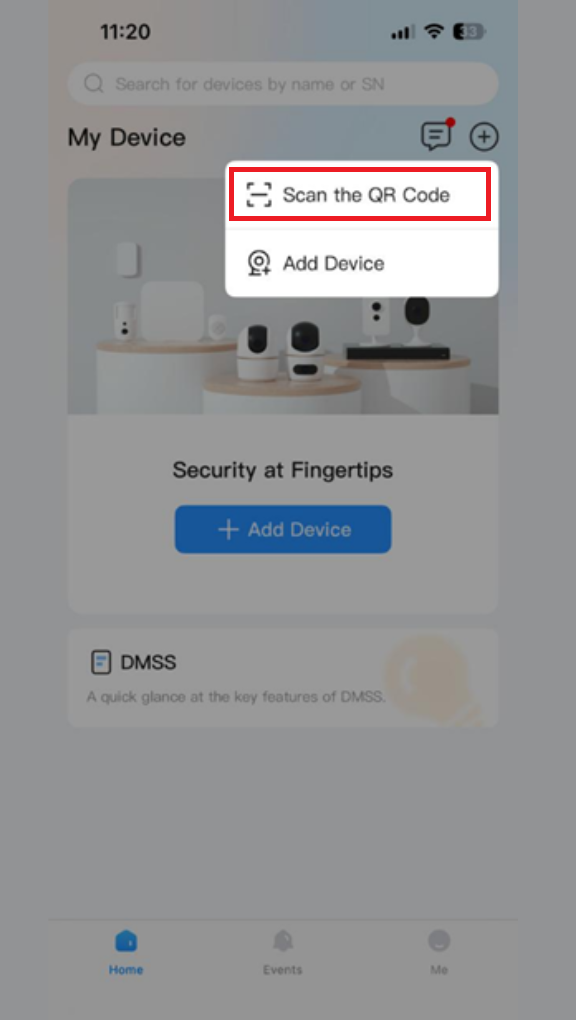
If you choose to add your Dahua device using the Scan option, tap “Scan the QR code” in the DMSS app. Then, use your phone’s camera to scan the QR code located on your Dahua device or its packaging.
Once scanned, follow the on-screen instructions to complete the setup.
Step 6 (Optional): Add the device using the SN number
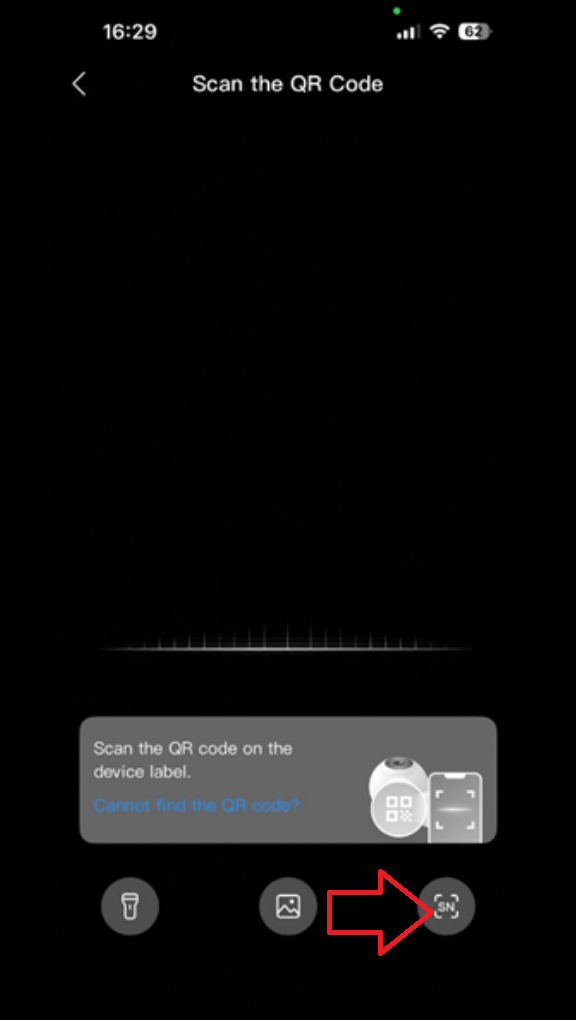
If you don’t have the QR code, you can add your Dahua device using its SN (Serial Number) instead. Tap [SN] in the DMSS app, enter the device’s serial number (usually found on the device label or packaging), and follow the on-screen instructions to complete the setup.
Note: This step is optional — you only need it if the QR code is unavailable.
Need expert help setting up your Dahua devices?
Our team is ready to assist you with installation, configuration, and troubleshooting to get your system up and running smoothly.
Click here get Professional help in configuring your Dahua Devices.
Step 7 (Optional): Enter the Device Serial Number
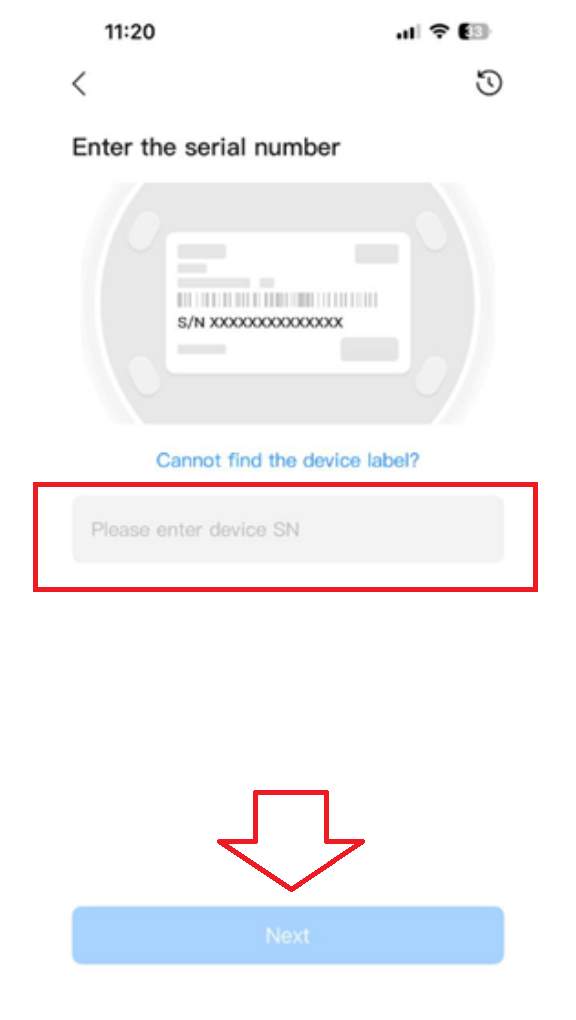
If you don’t have a QR code for your Dahua device, you can add it using the SN (Serial Number) option. To do this, tap [SN] in the DMSS app. You’ll see a field where you can enter the device’s serial number, which is usually found on the device itself, on its packaging, or in the user manual.
Carefully type the serial number exactly as it appears to ensure the app can locate and connect to your device. After entering the number, tap Next to continue.
This step is completely optional — it’s only needed if the QR code is unavailable. Once completed, the DMSS app will begin connecting to your device, and you’ll be ready to proceed with selecting your device type and configuring it for live view and playback.
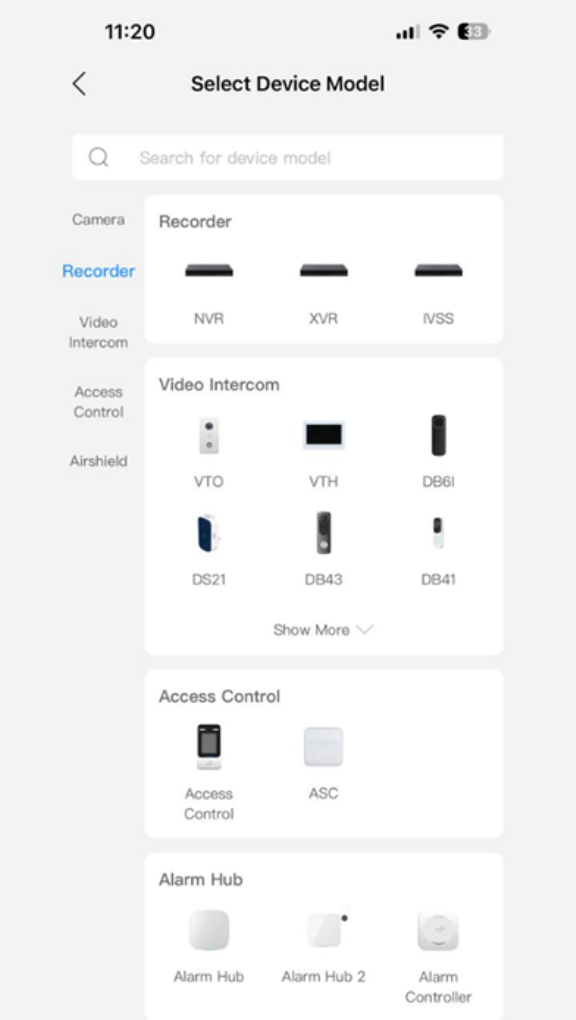
Step 8: Choose your device type
Select the correct type of Dahua device you want to add in the DMSS app. Options include IP Camera, NVR, or DVR/XVR. Make sure to choose the type that matches the device you purchased to ensure proper setup and connection.
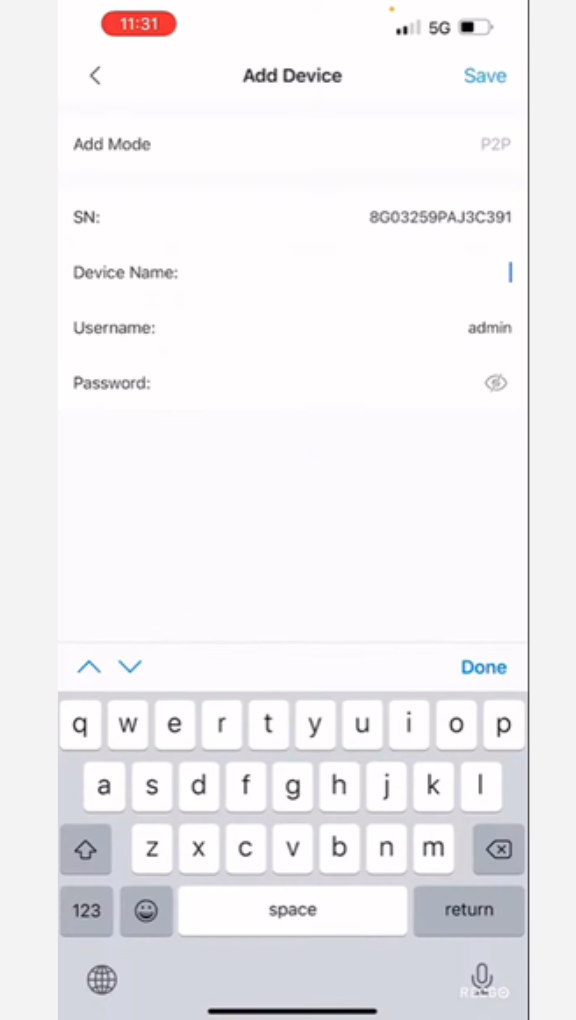
Step 9: Enter your Dahua device details
Next, enter the device name, username, and password for your Dahua device. The device name can be anything you like — choose something that helps you easily identify it. Make sure to enter the username and password exactly as set on your device for a successful connection.
Exploring DMSS Features
Now that your Dahua device is successfully added, you can start exploring the DMSS app and its features. Here are some things you can play around with:
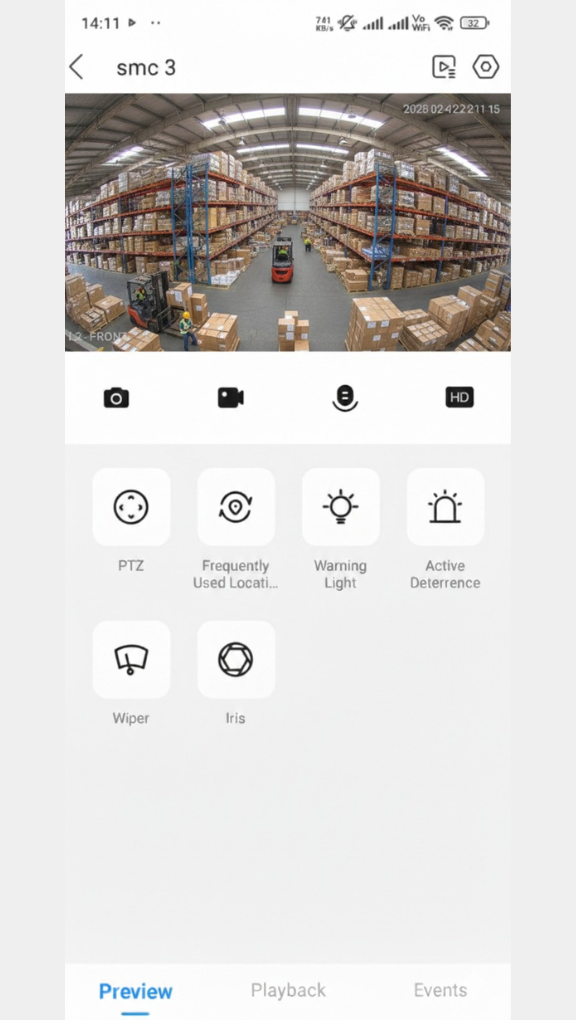
1. Live View Settings
In the Live View screen, tap the icon circled in the image below to switch between main stream and sub stream — this lets you choose between fluent transmission and a clearer image. You can also:
• Take screenshots • Save video clips • Close the live view
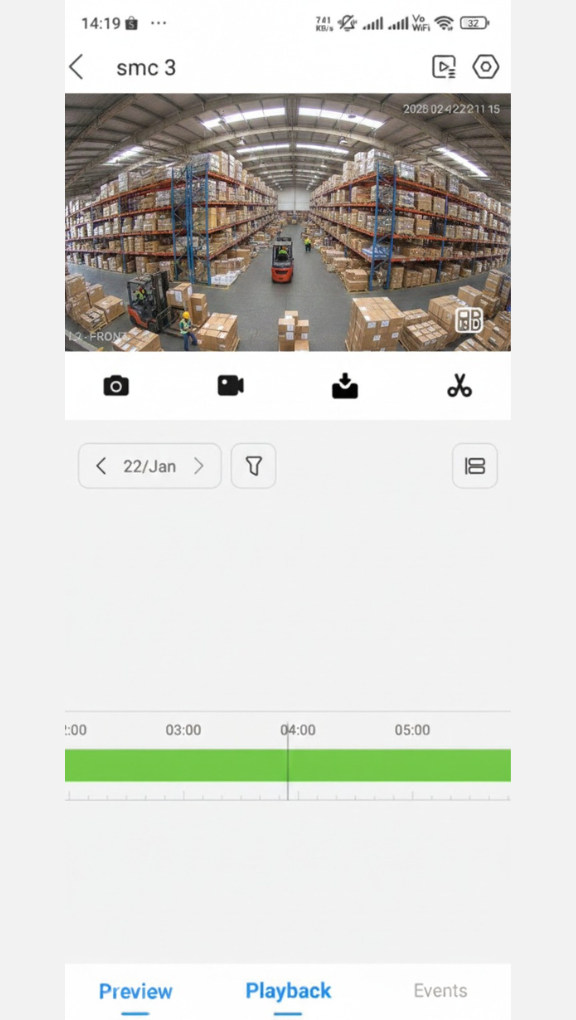
2. Watch Recorded Footage
To review and replay previously recorded videos from your Dahua device using the DMSS app, open the app and access the playback feature from the main menu. This allows you to go back in time and view any important events captured by your cameras.
• Go to the main menu of the app. • Tap the Playback icon located at the top left of the screen (as shown below).
Once in the playback interface, you can browse through all available footage, select the camera you want to view, and start watching recordings easily. This feature makes it simple to check events whenever you need and ensures you never miss any important details.
3. Select Time and Date for Playback
To watch specific recorded videos from your Dahua device in the DMSS app, you need to select the exact time and date of the footage you want to view. This helps you quickly find the events you’re looking for without scrolling through all recordings.
• Open the DMSS app and go to the main menu. • Tap the Playback icon at the top left of the screen (as shown below). • Choose the camera you want to view. • Select the date and time for the video you want to replay, then tap OK to start playback.
By selecting the correct date and time, you can quickly access the footage you need and review it in detail, making it easy to monitor events or check for important moments.
4. Playback Controls
While watching recorded footage in the DMSS app, you have several controls to help you review your videos efficiently and conveniently. These controls allow you to navigate through recordings and manage clips exactly how you need.
• Fast forward or rewind: Quickly move to the part of the video you want to see without watching the entire recording. • Export clips: Save important video segments to your device for future reference or sharing. • Watch in full screen mode: Expand the video to full screen for a clearer and more detailed view of the footage.
These playback tools make it easy to review events at your own pace and ensure you never miss any important details captured by your Dahua device.
Conclusion:
Setting up your Dahua devices with the DMSS app is quick and easy when you follow the steps above. Once your devices are added, you can enjoy live monitoring, video playback, notifications, and full control of your security system right from your phone.
Whether you’re keeping an eye on your home, office, or business, DMSS makes managing your Dahua devices simple and convenient. Take some time to explore the app’s features, adjust settings, and familiarize yourself with playback controls to get the most out of your system.
If you’re ready to expand your setup, check out our wide range of Dahua CCTV cameras, or reach out to our team for expert assistance with installation and setup.
“We have reviewed this guide for January 2026; all regulations regarding HDB corridor-facing cameras and PDPA compliance remain current”.
Closed-circuit television (CCTV) systems have seen a surge in popularity across Singapore, with homeowners and businesses alike recognizing their value for added security and monitoring.
For businesses, CCTV installations are more than just a precaution — they’re an essential tool to safeguard staff, protect property, and deter potential threats to the workplace.
At home, many Singaporeans now rely on CCTV cameras to check on their children, elderly family members, or domestic helpers while they’re away. Outdoor surveillance setups are also increasingly common, especially in situations involving neighborhood disputes, trespassing, or concerns about theft and vandalism.
In this article, we’ll break down the key CCTV laws in Singapore and the legal guidelines you need to know when installing CCTV systems — whether for private residences or commercial spaces — and how to ensure you remain compliant with CCTV regulations in Singapore.
What This Guide Will Cover
This guide will walk you through important points on installing CCTV cameras legally in Singapore, including:
• Your rights to install CCTV cameras within or outside your residential property
• Whether it’s permissible to use video or audio-enabled doorbells or peephole cameras
• The key legal requirements for operating home surveillance cameras
• Regulations around placing CCTV systems inside or around your business premises, and your responsibilities under Singapore’s Personal Data Protection Act (PDPA)
• Potential penalties for failing to comply with PDPA regulations
• Whether a professional installer is required or if you can install CCTV cameras on your own
Browse our full range of CCTV cameras for home and business use.
How to Install CCTV Cameras Legally in Singapore for Home Use
Can I install CCTV cameras inside my home?
Yes, you are allowed to install CCTV cameras inside your home without needing permission from any authorities. However, there are important guidelines to keep in mind.
Since May 2023, owners of HDB flats no longer need approval to install CCTV cameras that face corridors from within their units. Still, these cameras must not point directly at the doors or windows of neighboring flats to respect their privacy.
If a neighbor believes your CCTV camera invades their privacy — for example, if it captures footage focused on their unit and tracks their movements — they can file a complaint with the HDB, the Town Council, or use the Community Disputes Resolution Act. Authorities may then investigate and could require you to remove the camera.
Whether you live in public or private housing, neighbors also have the right to take legal action if your CCTV setup interferes with their enjoyment of their property by recording their activities. We’ll cover this legal aspect in more detail later on.
Can I Install CCTV Cameras Outside My Home?
Whether you’re allowed to install CCTV cameras outside your residence depends largely on the type of property you live in.
Installing CCTV Cameras Outside an HDB Flat
For HDB flats, the areas outside your unit are classified as common property overseen by the Town Council. This means that any installation of CCTV cameras outside your flat is subject to Town Council by-laws.
According to these by-laws, you must obtain prior approval before installing any fixtures or devices, including CCTV cameras, in common areas. Installing cameras without permission can result in fines of up to $5,000.
How to Get Town Council Approval for Installing CCTV Cameras?
If you want to install CCTV cameras outside your HDB flat, you need to follow these steps to obtain permission from the Town Council: File a Police Report
1. First, you must report any issues or incidents involving your neighbors or other individuals that justify the need for CCTV surveillance. The Town Council requires this police report before considering your installation request. Submit a Request to the Town Council
2. Next, send an email to the Town Council responsible for your HDB estate, requesting approval for your CCTV installation. Be sure to include a copy of the police report with your email. The approval process typically takes about 1 to 2 weeks, and you will receive notification of the outcome via email.
3. Install the CCTV Cameras Upon Approval Once you have the green light, you can purchase and install the CCTV system. Note that the Town Council allows CCTV cameras to be installed only on a temporary basis — for up to 6 months. After this period, if you still need the cameras, you must submit a fresh request for approval.
Looking for dependable security systems? Dive into everything about our CCTV Camera solutions.
Installing CCTV Cameras Outside a Condominium Unit
For condominiums, installing CCTV cameras outside your unit is typically subject to the rules and by-laws set by your Management Corporation Strata Title (MCST). It’s important to review these regulations carefully to understand any conditions you must follow, such as whether prior approval is required and how long the CCTV cameras are allowed to remain installed.
Installing CCTV Cameras on Landed Property
If you own a landed property, you are generally free to install CCTV cameras anywhere within your property’s compound without restrictions.
Can You Install Doorbells or Peepholes with Built-in Video and Audio Recording?
Smart doorbells and peepholes equipped with video and audio recording features have become increasingly popular. According to HDB guidelines, these devices are generally viewed as less intrusive compared to traditional CCTV cameras.
As such, HDB allows residents to install smart doorbells and digital door viewers inside their flats without needing prior approval. However, if you want to install these devices in common areas, such as on walls outside your flat or other shared spaces, you may still need permission from your Town Council. Most Town Councils require written consent before allowing CCTV or CCTV-like devices in common property areas, though the exact rules may vary slightly between councils.
For example, in a statement to the Straits Times, a representative from Ang Mo Kio Town Council confirmed that approval is required for both CCTV cameras and smart doorbells installed in common areas.
When it comes to peepholes, since they are installed on your door and considered part of your private unit, no Town Council approval is necessary. Still, it’s important to be mindful of your neighbor’s privacy. If they feel that your device is excessively intrusive or amounts to surveillance of their home, they have the right to raise a complaint.
…Still, it’s important to be mindful of your neighbor’s privacy. If they feel that your device is excessively intrusive or amounts to surveillance of their home, they have the right to raise a complaint. For residents looking for enhanced visitor management and access control, check out our Intercom Systems in Singapore guide.
What Laws Must I Follow When Operating CCTV Cameras?
Respect Your Neighbor’s Enjoyment of Their Property
In Singapore, the Personal Data Protection Act (PDPA) mainly governs organizations and businesses, so it does not regulate how individuals use CCTV footage captured for personal, non-commercial purposes, nor does it specify what the cameras can record.
However, the Community Disputes Resolution Act (CDRA) requires you to avoid interfering with your neighbour’s use or enjoyment of their home. This rule applies whether your CCTV cameras are installed inside your unit or in common areas.
Under the CDRA, a “neighbour” is defined as someone living in the same building or within 100 metres of your home.
For instance, if your CCTV camera is pointed directly at your neighbour’s unit or the staircase landing outside their door and records their movements, you may be considered to be interfering with their property enjoyment. To stay compliant, cameras should generally focus on your own unit’s entrance or immediate surroundings.
If your neighbour believes your CCTV setup is causing such interference, they can bring the matter before the Community Disputes Resolution Tribunal. The Tribunal can issue court orders which may include requiring you to pay compensation up to $20,000, remove the camera, or adjust how it is installed.
Removing CCTV Cameras After the Approved Installation Period
As mentioned earlier, Town Council approval for installing CCTV cameras outside your HDB flat is granted for a limited timeframe.
Once this approved period ends, you are required to remove the CCTV cameras. Failing to do so would violate Town Council by-laws and could lead to fines of up to $5,000.
If you reside in a condominium, similar rules set by your Management Corporation Strata Title (MCST) may apply regarding the duration that CCTV cameras can remain installed.
Browse our full range of CCTV cameras for home and business use.
How to Install CCTV Cameras Legally in Singapore for Business Use
Unlike residential installations, setting up CCTV cameras for business purposes involves more complex requirements because organizations are subject to Singapore’s Personal Data Protection Act (PDPA).
When CCTV footage captures personal data—such as images or videos that can identify individuals—the collection, use, and disclosure of this footage must comply with the PDPA’s rules.
A Brief Overview of the PDPA
Under the PDPA, organizations have several key obligations, including the following three important responsibilities:
1. Consent obligation: The organization must not collect, use or disclose personal data unless the individual has, or is deemed to have, given consent to such collection, use or disclosure.
2. Reasonable purposes requirement: The collection, use or disclosure of personal data must be for purposes that a reasonable person would consider appropriate in the circumstances.
3. Notification obligation: The organization must notify the individual of the purposes of collecting, using or disclosing the data.
Can I Install CCTV Cameras Inside or Outside My Business Premises?
What Are the PDPA Rules I Must Follow?
Yes, you are allowed to install CCTV cameras both inside and outside your business premises. The Personal Data Protection Act (PDPA) does not restrict businesses from capturing footage that includes areas beyond their own property boundaries.
However, how the PDPA applies will depend on whether the location is accessible to the public.
This is because the PDPA offers limited exemptions when CCTV footage captures personal data in public spaces—areas where individuals are generally aware they may be observed, and where there are minimal or no access restrictions.
For example:
• A shopping mall, retail store, or café would typically be considered publicly accessible.
• In contrast, offices with keycard entry or secure zones would be classified as non-public areas, where stricter PDPA compliance is required.
So, while you’re free to install cameras, you must understand how the public or private nature of the premises affects your data protection responsibilities.
Complying with Consent and Notification Requirements
Whether or not your business premises are publicly accessible, if you plan to install CCTV cameras in a non-public area—such as a private hallway, staff-only section, or restricted office space—you must comply with the PDPA’s consent and notification obligations.
Best Practices for CCTV Notices
One effective way to meet these obligations is to display clear signage at the entrances or key areas where cameras are in operation. These notices should inform individuals that CCTV surveillance is being used to collect personal data.
Doing so helps fulfill your notification requirement, and also serves as implied consent—meaning that anyone who enters the premises after seeing the notice is considered to have given their agreement to the recording.
To be effective, the sign should include more than just a camera icon. It should also state the purpose of the surveillance, especially if it’s not immediately obvious—for example: “This area is monitored by CCTV for security purposes.”
Meeting the PDPA’s “Reasonable Purposes” Requirement
This obligation applies to both publicly accessible and restricted business premises. To stay compliant, businesses must ensure that the scope of CCTV coverage is reasonable and aligned with the intended purpose of the surveillance.
While the PDPA doesn’t explicitly ban placing CCTV cameras outside your business property, extra caution is needed in such cases. Surveillance that extends beyond your own premises may be harder to justify under the “reasonable purposes” clause.
For instance, if your goal is to safeguard a factory, it might be acceptable for your cameras to capture footage slightly beyond the perimeter—such as areas that could show how intruders accessed the site.
However, if the coverage goes far beyond what’s necessary for that security purpose, it could be deemed excessive, potentially placing your organisation in violation of the PDPA.
The key takeaway: your CCTV setup should be proportionate and clearly linked to a legitimate business need.
As a general guideline, CCTV cameras must never be installed in private or sensitive areas such as toilets or changing rooms. Doing so could potentially lead to criminal charges for outrage of modesty or voyeurism, both of which are serious offences under Singapore law.
Additional PDPA Obligations to Be Aware Of
Beyond consent, notification, and purpose limitations, businesses must also comply with other PDPA requirements, including:
• Data protection obligations (e.g., securing stored CCTV footage against unauthorized access)
• Retention limits (only keeping footage for as long as necessary)
• Access and correction rights (individuals may request access to footage containing their personal data)
Failure to meet these obligations can result in enforcement action by the Personal Data Protection Commission (PDPC), including financial penalties and other legal consequences.
The Access Obligation: When Individuals Request CCTV Footage
Under Sections 21 and 22 of the PDPA, individuals have the legal right to access their personal data — and this includes any CCTV footage where they can be identified.
If someone makes such a request, your business is required to provide, within a reasonable timeframe, access to the relevant footage in your possession or control. You must also inform the individual how the footage has been used or disclosed, as long as the usage occurred within the past 12 months of the request.
This access obligation applies to all CCTV recordings, whether they were captured in public-facing business areas or restricted-access zones.
What If the CCTV Footage Contains Someone Else’s Personal Data?
According to Section 21(3)(c) of the PDPA, if fulfilling a CCTV access request would expose the personal data of another individual, the organization must not release the footage.
This situation is fairly common, as surveillance videos often capture more than one person.
However, the Personal Data Protection Commission (PDPC) provides guidance that allows organizations to still comply with access requests under certain conditions, such as:
• Using masking or blurring techniques to hide the identities of other individuals appearing in the footage
• If the footage was recorded in public areas, where the personal data is already publicly accessible
• If the other individuals provide consent to share the footage
In these situations, the organization can process the request and is allowed to charge a reasonable fee to cover any expenses involved, such as video editing or technical processing.
Retaining CCTV Footage: How Long Is Too Long?
Organisations must be mindful not to keep CCTV footage longer than necessary. Once the original purpose for collecting the footage has been fulfilled—or there’s no valid legal or business reason to retain it—it should be securely deleted.
The PDPA does not set a specific time limit for how long CCTV recordings can be stored. Instead, the appropriate retention period depends on your organisation’s operational needs. For instance, if your cameras are installed for security monitoring, the footage should be erased once it’s no longer needed for that purpose.
The Personal Data Protection Commission (PDPC) encourages businesses to routinely review stored CCTV footage and avoid keeping it longer than necessary. To stay compliant and organised, it’s also recommended to create a data retention policy—this should outline how long personal data like CCTV footage will be kept and the reasoning behind it.
What If an Individual Requests That I Delete Their CCTV Footage?
Under the PDPA, individuals have the right to withdraw their consent for the collection, use, or disclosure of their personal data—this includes CCTV footage—by giving reasonable notice.
If someone withdraws their consent, your organisation should no longer use the footage or share it with others.
However, organisations are not obligated to delete or destroy the CCTV footage simply because of such a request. You may continue to keep the footage if it is still needed for legitimate legal or business purposes.
Generally, violating the PDPA can result in penalties including a fine of up to $10,000, imprisonment for up to 3 years, or both for a first-time offence.
A notable example is the case involving Management Corporation Strata Title Plan No. 3593 (MCST) and others, which highlights the serious consequences of PDPA breaches. In this incident, a security company hired by the MCST of a condominium unlawfully disclosed CCTV footage.
A resident requested access to footage from the condominium lobby, which contained personal data of multiple individuals. A security officer from the security firm sent the footage via WhatsApp to the resident without approval from the MCST.
The court ruled that the MCST was ultimately responsible for ensuring PDPA compliance since it appointed the security company. The MCST was fined $5,000, a reduced amount due to their voluntary reporting of the breach and swift corrective actions.
Additionally, the security company was mandated to establish a data protection policy and provide staff training on handling personal data properly.
Can I Install CCTV Cameras Myself?
According to the Private Security Industry Act, anyone installing CCTV cameras must hold a valid license to offer security-related services. This means you cannot legally install CCTV cameras on your own unless you are licensed. Instead, you need to hire a professional installer who possesses a Security Service Provider licence to carry out the installation, as mentioned earlier. Similarly, when engaging contractors for property improvements such as professional Landscaping Services, it is always advisable to work with qualified service providers to ensure the job is done safely and properly.
Final Thoughts on Installing CCTV Cameras in Singapore
CCTV cameras offer valuable security benefits for both homes and businesses. However, their installation and use are subject to multiple legal regulations in Singapore that must be followed carefully.
If you’re a business owner planning to install CCTV cameras on your premises, it’s highly advisable to seek guidance from a data protection lawyer. The requirements under the PDPA can be complex, and professional legal advice can help you navigate these rules effectively and avoid potential penalties.
Need expert help installing your CCTV cameras?
Looking for reliable and professional CCTV installation? Techcom Engineering Pte Ltd is your trusted partner in Singapore, offering expert, licensed installation services to ensure your CCTV system is installed safely, securely, and fully compliant with local regulations. Whether for your home or business, our skilled team provides a hassle-free setup tailored to your needs.
Click here to schedule a free consultation with Techcom Engineering and experience hassle-free, expert CCTV installation you can trust.
Cyber Security Alert: CCTV Camera Hacked — you might never know until it’s too late. In Singapore, more than 50,000 home CCTV cameras have been compromised, with private images leaked on platforms like Discord. From baby monitors to video doorbells, every connected CCTV camera in your home can be a hacker’s doorway.
Smart devices make life easier — but they also make homes more vulnerable to CCTV hacking. Almost every household now has at least one CCTV camera, whether it’s a traditional wired system, a Wi-Fi baby monitor, a smart video doorbell, or even a robot vacuum with a built-in lens. Once connected to the internet, these devices become targets, making cyber security for CCTV more critical than ever.
To prove how real the threat is, the Talking Point team ran an experiment — hiring a professional cybersecurity researcher to hack into home CCTV cameras in Singapore. The results were eye-opening.
In a Talking Point episode, producers teamed up with cybersecurity expert Steve Kerrison to test how easily home CCTV cameras could be compromised. You can watch the full Talking Point investigation here.
The Experiment: Can a Hacker Really Access Your Home Camera?
The Talking Point crew purchased two different smart cameras — one from a reputable physical store and another from a budget online marketplace — and installed them in the homes of two hosts.
Cybersecurity researcher Steve Kerrison, with over seven years in information security, was given one mission: gain access to these cameras without the hosts’ knowledge.
The challenge? The hosts knew he might try to hack their devices — but they didn’t know when or how.
The first host’s CCTV camera was a popular, well-known brand trusted by thousands of households. But instead of breaking into the camera’s firmware or cracking its security system, Steve — the cybersecurity expert — went after something far easier to exploit: the human using it.
It started with a carefully crafted phishing email. The host received what looked like a legitimate message from the camera manufacturer, warning about a “critical firmware update” that needed to be installed immediately to keep the device secure. The email even included the company’s logo, proper branding, and a link to what seemed like the official login page.
Here’s how the CCTV camera hack unfolded step-by-step:
1.The Click – Trusting the email, the host clicked the link, convinced it was from the real manufacturer.
2. The Fake Login Page – The website looked identical to the genuine camera app’s login portal. Without suspecting a thing, the host entered their username and password. 3.The Two-Factor Trap – As part of the process, the fake site asked for a PIN code, which was actually sent by the real two-factor authentication system of the manufacturer. 4.Full Access Granted – By handing over this PIN, the host unknowingly gave Steve complete access to their actual account, allowing him to watch the live feed from their CCTV camera in real time.
This attack wasn’t about breaking into the CCTV camera’s hardware or software — it was about tricking the person into handing over the keys. In cybersecurity, this is called a phishing attack. It proves that sometimes the easiest way to get a CCTV camera hacked is to exploit human trust, not just technology.
For businesses and homeowners who want professional protection against phishing-based breaches, cybersecurity providers like NetNXT offer advanced monitoring and managed security services.
The second host’s CCTV camera hacked was a budget model costing just $37, purchased from an online marketplace. While it seemed like a good bargain, the hidden cost came in the form of poor built-in security.
Here’s the problem: during installation, the camera began broadcasting critical setup information over Wi-Fi before any security settings — like passwords or encryption — were applied. This meant anyone nearby could “listen in” to the installation process and grab the data needed to take control.
From less than 100 meters away, Steve intercepted the live setup process and managed to:
1. Add Himself as an Authorized User – This gave him the same level of access as the owner. 2.Set Up Motion Alerts for Himself – He configured the system so that every time the camera detected movement, it automatically sent him an email with a snapshot.
The host had no idea their CCTV camera hacked was quietly sending images to someone else every time they walked past it. Steve received a fresh image straight to his inbox — without ever needing to touch the camera physically or enter the home.
This case proves that cheap models can lead to a CCTV camera hacked scenario not just because of weak passwords, but because some devices have serious flaws right out of the box. If security isn’t enabled during setup, attackers can slip in and take control before you’ve even finished installing it.
Why a Hacked CCTV Camera is a Bigger Risk Than You Think
When people hear “camera hacked,” they usually imagine someone spying on them — but the real danger goes far beyond voyeurism. A compromised CCTV camera can allow cybercriminals to:
• Track your daily routines – Perfect for planning burglaries. • Identify valuables – Pinpointing items worth stealing. • Access your Wi-Fi credentials – Stored inside the camera. • Control other connected devices – Including smart locks and alarms. • Record sensitive information – Even capturing keystrokes if the camera sees your hands at a keyboard.
For businesses, hacked cameras can also expose sensitive documents, employee activities, and customer interactions.
Looking for dependable security systems? Dive into everything about our CCTV Camera solutions.
Why Cheap Cameras Are Often More Vulnerable
Ultra-cheap online cameras can be tempting, but they often come with serious cybersecurity flaws:
• Weak or hard-coded default passwords. • Outdated firmware with known vulnerabilities. • Lack of regular security updates. • Unencrypted video streams that can be intercepted.
When your cyber security CCTV camera is hacked, the attacker doesn’t care whether you paid $37 or $370 — but cheaper devices often make their job much easier.
How to Protect Your Smart Cameras from Hackers
From this investigation, six key security steps stand out for anyone who wants to avoid having their CCTV camera hacked:
1.Change default passwords immediately – Most CCTV cameras and smart devices come with a factory-set username and password like “admin” or “12345.” Hackers know these defaults and often try them first. Replace them with a strong, unique password that you don’t use anywhere else. The longer and more random, the better — it’s one of the simplest ways to prevent your CCTV camera from being hacked.
2.Only update through official apps or websites – If you get an email claiming your CCTV camera needs an urgent update, don’t click the link. Phishing scams often mimic real companies to trick you into handing over login details. Always update from the manufacturer’s official app or website.
3. Buy from trusted brands – A cheap camera might save money upfront, but if it’s from an unknown or unreliable brand, it may never get security updates. Established brands with a proven record of patching vulnerabilities greatly reduce your risk of getting your CCTV camera hacked.
4.Enable two-factor authentication (2FA) – This adds an extra security step when logging in, such as a code sent to your phone. However, set it up only through the manufacturer’s official app or website — fake 2FA requests are a common hacker trick.
5.Regularly check for firmware updates – Firmware is the internal software that runs your CCTV camera. Updates often fix known security holes. Check monthly for updates and install them promptly to close any gaps hackers might exploit.
6.Secure your home network – Your Wi-Fi is the gateway to all connected devices. Use the strongest encryption available (WPA3 if possible) and a strong, unique Wi-Fi password to make it harder for outsiders to get in.
Bonus tip: Keep IoT devices like CCTV cameras on a separate “guest” Wi-Fi network. This way, if one gadget is compromised, hackers can’t easily access your main devices like laptops, phones, or work computers.
This case shows that it doesn’t matter if you own a $37 budget model or a high-end system — anyone can have their CCTV camera hacked if they overlook basic security steps. Cybercriminals can exploit weak passwords, fake update links, or even unsecured setup processes to gain access to your devices. The good news is that with strong passwords, official updates, two-factor authentication, and a secure network, you can make your cameras far harder to break into.
Cyber Security CCTV Camera Hacked – Real Incidents in Singapore
The Talking Point experiment wasn’t just a staged test. Real incidents have shown how serious this threat is.
2020 – Over 50,000 hacked home camera recordings in Singapore were leaked online. 2022 – Reports surfaced of strangers speaking to children through hacked baby monitors. 2023 – Multiple businesses reported hackers disabling security cameras during break-ins.
These incidents prove that the “it won’t happen to me” mindset is dangerous.
Hackers aren’t just targeting celebrities or wealthy business owners. In reality, anyone with an internet-connected camera is a potential target. Cybercriminals don’t care about your social status — they care about easy opportunities. And in most cases, any CCTV camera with weak security can be hacked if it’s not properly protected.
You could be the next victim of having your CCTV camera hacked if:
1.Your camera still uses its factory default password – Many cameras come with generic logins like “admin” or “12345,” which hackers can guess in seconds.
2.You’ve ignored firmware updates – Outdated software often has known security flaws that cybercriminals actively exploit. You’ve clicked suspicious links related to your device – Phishing emails or fake “update” notifications can trick you into handing over your login credentials.
3.You use ultra-cheap cameras without proper encryption – Some budget models lack basic protections, making it much easier for hackers to intercept your data.
The bottom line? It doesn’t matter if your camera is expensive or budget-friendly — if you neglect security, you’re leaving the digital door wide open.
Final Thoughts: Security is a Habit, Not a Purchase
The Talking Point experiment revealed something alarming — hacking a home CCTV camera isn’t always the work of a genius programmer hunched over lines of code. In some cases, it can be as simple as sending a believable phishing email and tricking the owner into clicking a malicious link. Once that happens, attackers can slip past your defenses and gain access to your camera feed. Smart devices like home CCTV cameras, smart locks, and voice assistants make life easier, but every device connected to the internet is also a doorway — and cybercriminals are always looking for an unlocked one. The encouraging news is that protecting yourself doesn’t require you to be a tech expert; it just requires consistent, basic cyber hygiene.
Take five minutes today to:
1.Check your camera passwords – Avoid using default passwords or simple combinations like “123456” or your birth date. Use strong, unique passwords for each device.
2.Update your firmware – Manufacturers often release updates to patch security flaws. If you skip them, you leave the door open for known attacks.
3.Verify your update sources – Only download updates from official manufacturer websites or apps to avoid installing malicious software disguised as legitimate updates.
These small, consistent steps can go a long way in preventing a major invasion of your privacy. In cybersecurity, the simplest habits often provide the strongest protection.
Need a Secure CCTV Setup in Singapore?
At cctvcamera.sg, we go beyond simply selling cameras — we provide secure, reliable CCTV systems designed to protect both homes and businesses. Our mission is clear: to help you safeguard what matters most while ensuring your devices remain protected from both physical and cyber threats.
We understand that in today’s connected world, a camera is not just a piece of hardware — it’s part of your digital security network. That’s why our comprehensive solutions are built with safety, reliability, and long-term protection in mind:
• Trusted Devices – We only work with reputable manufacturers that have a proven track record in security, ensuring your system is built on a solid foundation.
• Secure Professional Installation – Our expert installers use safe configuration practices to reduce vulnerabilities and prevent unauthorized access.
• Ongoing Support & Guidance – We provide clear advice on secure usage, timely firmware updates, and proper maintenance so your system stays resilient against evolving threats.
Your security is too important to leave to chance. A hacked camera doesn’t just compromise your privacy — it can expose your home or business to real risks.
Take proactive steps now.Contact us for a free consultation, and let us help you protect your privacy, safety, and peace of mind.
In Singapore and across many parts of Asia, the Hungry Ghost Festival (中元节 or Zhong Yuan Jie) is a period rich with cultural traditions, spiritual beliefs, and respectful caution. It usually falls in the 7th lunar month, which in 2025 spans from August 4 to September 2. During this time, it’s believed that spirits of the dead roam the earth — leading many to avoid certain activities that could “disturb” or attract them.
For homeowners and business owners, a common question often comes up: Is It Safe to Install CCTV During Hungry Ghost Month? This concern blends cultural sensitivity with practical security needs, making it an important topic for anyone considering protecting their property during this period.
Short Answer: Yes — It’s Safe to Install CCTV
When people ask, “Is It Safe to Install CCTV During Hungry Ghost Month?”, the answer is yes. While some superstitions discourage renovations, groundbreaking work, or major household changes during this period, CCTV installation is generally not considered taboo or spiritually risky. Unlike noisy construction or activities believed to disturb spirits, installing a CCTV system is a routine, non-intrusive process. It involves minimal disruption to the environment and does not interfere with the traditional customs or beliefs associated with Ghost Month — making it both culturally acceptable and practically beneficial.
A traditional food offering is laid out to appease wandering spirits and bring good fortune during the Hungry Ghost Festival.
Looking for dependable security systems? Dive into everything about our CCTV Camera solutions.
What Is Hungry Ghost Month?
In Taoist and Buddhist traditions, the Hungry Ghost Festival marks a time when the “Gates of Hell” are believed to open, allowing spirits to return to the living world. Families offer food, incense, joss paper, and prayers to appease lost or wandering souls, ensuring that they are respected and not left restless. This period is not only about honoring ancestors, but also about practicing mindfulness in daily activities to avoid offending unseen visitors.
Common practices during this period include:
• Avoiding late-night outings to reduce encounters with wandering spirits • Not swimming, due to the superstition that drowning spirits may pull swimmers under • Delaying house moves or major renovations, which are thought to disrupt the energy of a home • Avoiding marriage ceremonies or business openings to prevent starting a new chapter under “inauspicious” conditions • Refraining from disturbing the ground or making loud noises that might attract unwanted attention from spirits
These customs are deeply rooted in respect and caution, guiding many personal and business decisions during this time. But when it comes to Hungry Ghost Month CCTV installation, the activity doesn’t fall under these taboos. In fact, it can be seen as a modern form of protection — one that works in harmony with traditional practices to ensure safety, security, and peace of mind.
An elderly man carefully installs a CCTV camera, showing that safety knows no age — protection begins with action.
Why Installing CCTV Is Culturally Safe During Ghost Month
1. No Ground Disturbance
Hungry Ghost Month CCTV installations usually involve wall-mounting cameras, running cable, and configuring devices — no digging, no demolition, no disruption of earth or natural elements. This means it does not disturb spirits associated with the land.
2. No Invitation to Spirits
A CCTV system is a passive electronic device — it’s designed to monitor and protect, not to communicate with or attract anything spiritual. Unlike rituals or practices that involve summoning or calling, CCTV simply acts as a “silent watcher.”
3. Modern Logic vs Tradition
The taboos surrounding Hungry Ghost Month stem from cultural tradition, not from practical or scientific risk. While it’s important to respect these beliefs, it’s also worth noting that many businesses in Singapore continue to operate, renovate, and install systems during this period without any issue.
4. Added Peace of Mind
Ironically, CCTV can help ease anxieties during Ghost Month. Whether you’re a believer or not, having 24/7 surveillance gives families and businesses reassurance, especially during a time where stories of unexplained activity might stir concern.
Security Concerns During Hungry Ghost Month
Some people believe that mischievous behavior — both from spirits and humans — may be more common during this time. Regardless of superstition, Hungry Ghost Month coincides with:
• Increased nighttime rituals in residential areas • More empty homes and units as people travel or avoid going out • A rise in superstitious fears, making people more alert
All of these factors point to one truth: security matters, now more than ever. If you’ve been asking yourself, “Is it safe to install CCTV during Hungry Ghost Month?”, the answer is yes — and it can be a timely step toward better protection.
CCTV Installation Singapore: Staying Safe During Ghost Month
• Monitor and deter any trespassers • Provide a sense of control during a culturally uncertain time • Record evidence if something unusual happens
Respecting Beliefs While Staying Protected
At Techcom Engineering, we understand that cultural traditions and personal beliefs matter. That’s why we approach every project with respect and flexibility. If you’ve ever wondered, “Is it safe to install CCTV during Hungry Ghost Month?”, rest assured that we’re happy to work around your preferences — scheduling your installation before or after the festival at your convenience, with absolutely no pressure.
In Singapore, CCTV installation during Hungry Ghost Month is widely regarded as a safe and non-disruptive activity. It doesn’t involve loud construction, structural changes, or anything that could be seen as disturbing spirits. In fact, many home and business owners choose to install security systems during this period, prioritizing safety and peace of mind without conflicting with cultural practices.
Families burn joss paper in a metal drum by the roadside — a symbolic gesture to honor and provide for ancestors during the Hungry Ghost Festival.
No. CCTV systems are electronic devices that passively monitor your property. They do not emit signals or energy that would attract or invite spiritual entities.
❓ What if I’m still uncomfortable?
That’s completely valid. At Techcom, we can: Delay installation until after the Ghost Month ends Perform a non-invasive installation without drilling (if preferred) Coordinate installation timings that align with good feng shui or auspicious dates
❓ Can CCTV cameras detect paranormal activity?
CCTV systems are designed to detect motion, not spirits. While there are stories online about “ghost sightings” caught on camera, these are typically due to lens flare, insects, dust, or video compression artifacts — not actual supernatural events.
❓ Are there any spiritual precautions I should take?
Some customers prefer to burn incense or pray before installation for peace of mind. While not necessary, we respect your wishes and can adjust accordingly.
Final Thoughts: Proceed With Confidence
The Hungry Ghost Festival is a time for reflection, remembrance, and honoring cultural traditions — a period when many families pay respects to ancestors and take part in rituals for protection. While it’s a season steeped in superstition for some, it doesn’t mean you need to put off important decisions about safeguarding your property.
If you’ve been wondering, “Is it safe to install CCTV during Hungry Ghost Month?”, the answer is yes — it’s not only safe and culturally acceptable, but it can also be a wise move. Security threats don’t take a holiday, and a well-placed surveillance system offers around-the-clock protection, whether you’re at home, at work, or away. In fact, knowing that your property is monitored 24/7 can bring extra peace of mind during a time when people are especially mindful of safety and well-being.
Whether you personally believe in spirits or simply value the reassurance that modern security provides, CCTV installation ensures that your loved ones, employees, and property are always protected — during Ghost Month and beyond.
Ready to Secure Your Property?
At Techcom Engineering, we understand the importance of both safety and cultural traditions — especially during the Hungry Ghost Month. Whether you’re looking to install your CCTV system now or prefer to wait until the festival period has passed, our team is here to support you with zero pressure and full respect for your beliefs.
We offer professional, discreet, and culturally sensitive CCTV installation services tailored to your schedule and comfort. Your security and peace of mind are always our top priorities.
CCTV systems has become an essential component of modern security, safeguarding everything from high-security government facilities to everyday retail shops. Over the years, surveillance cameras have evolved far beyond their grainy analog beginnings. Today’s systems are smarter, more connected, and more capable than ever, offering advanced features like AI-powered detection, cloud storage, and mobile access.
To help you stay informed and choose the right solution for your home or business, we’ve compiled 10 fascinating facts about CCTV surveillance and modern surveillance cameras in 2025. Don’t forget to check out our Essential Tips for CCTV Camera Installation for practical guidance on setting up your system effectively.
To help you make an informed decision for your business or property, we’ve compiled 10 fascinating facts about CCTV systems in 2025. Also, don’t miss our Essential Tips for CCTV Camera Installation for practical guidance on setting up your system the right way.
1. The First CCTV Systems Dates Back to WWII
The first known use of CCTV surveillance dates back to 1942, when German engineer Walter Bruch developed a system to monitor V-2 rocket launches. This pioneering setup allowed real-time video monitoring without the need for film, laying the foundation for modern surveillance camera technology.
Bruch’s system was designed for the German military at the Peenemünde Army Research Center. Using a wired transmission setup, live video from the rocket launch site was relayed to a remote monitoring station—making it the earliest practical application of electronic video surveillance.
Unlike traditional film-based methods, Bruch’s innovation transmitted video images directly to monitors. This breakthrough not only enabled immediate observation but also set the stage for the advanced CCTV surveillance systems we rely on today. After the war, Bruch continued shaping the future of video technology, contributing to the development of the PAL (Phase Alternating Line) color television system, which became a global broadcast standard.
Looking for dependable security systems? Dive into everything about our CCTV Camera solutions.
Walter Bruch, German engineer and inventor of the first operational CCTV system.
A V-2 rocket being prepared for launch at Peenemünde in 1942—monitored by one of the world’s first closed-circuit television systems developed by Walter Bruch.
2. Color CCTV systems Surveillance Arrived in 1956
In 1956, RCA introduced the first color CCTV surveillance system, adapting its pioneering broadcast television technology for security applications. This innovation was a significant milestone for surveillance cameras, as it allowed operators to identify critical visual details—such as clothing colors, vehicle types, and product labels—with much greater accuracy.
Initially, color CCTV was costly and primarily used in high-security or industrial environments. However, it gradually enhanced recognition capabilities and set the stage for the advanced video surveillance systems we rely on today. This development laid a critical foundation for modern CCTV standards, making surveillance more precise and effective.
3. Over 1 Billion CCTV Surveillance Cameras Operate Globally
As of 2024, over 1 billion CCTV surveillance cameras are in operation worldwide, highlighting how deeply CCTV surveillance has become embedded in modern infrastructure. China leads the global count, with hundreds of millions of cameras installed across public and private sectors.
Other highly urbanized nations, including the United States and the United Kingdom, follow closely behind, employing extensive surveillance camera networks to monitor public spaces, enhance security, support law enforcement, and manage traffic. This widespread adoption underscores the critical role of CCTV surveillance in maintaining safety and operational efficiency in cities around the globe.
Pan-Tilt-Zoom (PTZ) CCTV Surveillance Cameras Revolutionized Public Safety
The first outdoor CCTV surveillance system with pan-tilt-zoom (PTZ) functionality was installed in Bournemouth, England, in 1985 to monitor and manage large football crowds. This innovation marked a turning point in public surveillance, introducing unprecedented flexibility and coverage.
Modern PTZ surveillance cameras have since evolved significantly, offering 360-degree rotation, powerful zoom capabilities, remote directional control, and AI-powered tracking that can automatically follow moving subjects. These advanced features make PTZ cameras indispensable for city-wide CCTV surveillance, traffic management, crowd monitoring, and high-security facilities where wide-area coverage and real-time responsiveness are crucial.
5. Dummy CCTV Surveillance Cameras Are Still Widely Used for Deterrence
Although non-functional, dummy CCTV surveillance cameras remain a widely used and cost-effective deterrent in both residential and commercial settings. While these replicas cannot record footage, detect motion, or connect to monitoring systems, their realistic design—often featuring blinking LEDs and visible wiring—creates the impression of active CCTV surveillance.
This perceived presence alone can significantly reduce opportunistic crimes such as theft or vandalism, particularly in low-risk areas where installing a full surveillance camera system may be unnecessary or impractical. When used strategically, dummy cameras can complement real CCTV setups, enhancing overall security without the full cost of active systems.
6. Chongqing is now the most surveilled city per capita
As of 2024, Chongqing, China, has officially surpassed Orwell City in CCTV density, earning the distinction of being the world’s most heavily monitored city per capita. With over 2.6 million surveillance cameras installed across its urban landscape, Chongqing averages more than 400 cameras for every 1,000 residents.
This immense deployment highlights China’s commitment to CCTV surveillance as part of its smart city initiatives, leveraging technologies such as facial recognition and AI-driven analytics. The network enhances public security, improves traffic management, and supports law enforcement operations, while also sparking important discussions around privacy, data protection, and responsible monitoring practices.
Thermal CCTV surveillance cameras detect infrared radiation (heat) instead of relying on visible light, enabling effective operation in complete darkness. This technology is especially valuable in challenging environments where conventional surveillance cameras struggle, such as heavy smoke, fog, dust, or severe weather conditions.
By visualizing heat signatures from people, vehicles, or machinery, thermal cameras can detect intrusions or anomalies that might otherwise go unnoticed. These capabilities make them indispensable for high-security areas, perimeter protection, critical infrastructure, and industrial sites, where early threat detection is vital for safety and operational efficiency.
8. Laser microphones can capture audio without a mic
Laser-based surveillance technology—sometimes called laser spy tech—represents a cutting-edge advancement in CCTV surveillance and covert monitoring. This system can capture conversations from distances exceeding 50 meters by detecting microscopic sound vibrations on surfaces such as glass windows, walls, or objects. By aiming a laser beam at a reflective surface near a conversation, it converts these vibrations into intelligible audio.
Although rarely used in standard commercial or residential surveillance camera systems due to its specialized application, this technology illustrates how sophisticated and precise modern surveillance methods have become. It also highlights the importance of understanding potential privacy vulnerabilities in high-security environments and the growing role of advanced monitoring technologies.
9. IP cameras and AI analytics are replacing analog
As of 2025, IP CCTV surveillance cameras have emerged as the dominant choice in modern video monitoring, thanks to their advanced capabilities and flexible deployment options. These cameras deliver high-definition video—often in 4K resolution—and support features such as two-way audio, real-time alerts, and remote access via smartphones, tablets, or web browsers.
Many models also include secure cloud-based recording, eliminating the need for local storage and simplifying data management. What sets these surveillance cameras apart is their integration with AI-powered features, including facial recognition, people counting, line-crossing alerts, and behavior analysis. This combination of high-quality imaging and intelligent monitoring makes IP cameras ideal for both residential and commercial security systems seeking smarter, more proactive surveillance solutions.
10. Even museums use CCTV systems in creative ways
The Museum of Food and Drink in New York continues to charm visitors with its unique chocolate-monitoring CCTV feed, offering a behind-the-scenes look at the chocolate-making process through live video streaming. This creative use of surveillance technology blends entertainment, education, and transparency—turning what is typically a security tool into an engaging visitor experience. As of 2025, such novelty applications of CCTV systems remain popular in museums, public art installations, and interactive exhibits around the world, where live feeds add an immersive and often playful element to traditional displays.
Ready to Upgrade Your Security?
Don’t compromise when it comes to safety and peace of mind. Whether you’re installing a brand-new CCTV systems, upgrading from an outdated analog setup, or looking to integrate surveillance with smart access control and alarm systems, our team of experts is here to guide you every step of the way. We provide tailored solutions that align with your property’s needs, ensuring reliability, scalability, and ease of use. From consultation to installation and support, we’re committed to helping you secure what matters most.
Ensuring the safety of your home has never been more critical, and a wireless CCTV camera with mobile connectivity is one of the most effective ways to protect your property. Unlike traditional CCTV systems, these cameras allow homeowners to monitor live footage remotely via smartphones, tablets, or computers, giving real-time insights no matter where they are.
Modern wireless CCTV cameras offer a range of features, including motion detection, night vision, cloud storage, and push notifications, all integrated into easy-to-use mobile apps. Proper installation is essential to maximize coverage, reduce blind spots, and ensure the system operates reliably.
In this guide, we’ll walk you through the key considerations for choosing and installing a wireless CCTV camera with mobile connectivity, helping you secure your home efficiently while taking full advantage of modern technology.
A wireless CCTV camera with mobile connectivity is a modern security solution that connects directly to your smartphone or tablet through an app. This feature lets you view live footage, receive instant alerts, and control camera settings remotely, all from your mobile device. With this seamless integration, you can monitor your home in real time, whether you’re at work, traveling, or simply away, providing peace of mind and enhanced security.
Prefer a hassle-free setup? Click here to have your CCTV system professionally installed by Techcom Engineering Pte Ltd.
How Mobile Connectivity Works
A wireless CCTV camera with mobile connectivity uses your home Wi-Fi network and a dedicated smartphone app to keep you connected to your property in real time. Once the camera is installed and linked to the app, it streams live video directly to your mobile device and sends instant alerts if unusual activity is detected.
For smooth operation, both your camera and smartphone require a stable internet connection. The app acts as a bridge, converting data from the camera into a format your phone can display, allowing you to monitor your home anytime, anywhere.
Many apps also provide customizable settings, such as motion or sound sensitivity, so you receive alerts only for important events, minimizing false alarms and ensuring reliable home security.
A wireless CCTV camera with mobile connectivity allows you to monitor your home from anywhere in real time. Whether at work, traveling, or away for the day, you can check live footage instantly via your smartphone or tablet, providing continuous security and peace of mind.
Instant Alerts
These cameras send instant notifications to your mobile device whenever motion or unusual activity is detected. With a wireless CCTV camera with mobile connectivity, you can respond quickly to potential threats, whether it’s contacting authorities or handling the situation directly.
Ease of Use
Mobile-connected cameras are designed with user-friendly apps, making it easy for anyone to manage and control their home security system. Even those who aren’t tech-savvy can navigate the app effortlessly, access footage, and adjust settings with confidence.
Two-Way Communication
Many wireless mobile-connected CCTV cameras feature two-way audio, enabling you to speak to visitors at your door or deter intruders remotely. This feature adds flexibility and security, allowing you to interact with people on your property without being physically present.
Cloud Storage
Most wireless CCTV cameras with mobile connectivity include cloud storage options, ensuring your footage is safe even if the camera is damaged or stolen. Cloud storage provides a secure off-site backup, giving homeowners peace of mind that their data is always protected.
Choosing the Right CCTV Camera for Your Home
When selecting a CCTV camera with mobile connectivity, several factors should be considered to ensure you get the best system for your needs.
Key Features to Look For
Resolution
Look for cameras with high-definition (HD) resolution to ensure clear images. Cameras with 1080p or higher resolution are ideal. Higher resolution cameras provide more detail, making it easier to identify faces and license plates.
Field of View
A wider field of view allows the camera to cover more area. Cameras with a 120-degree or higher field of view are recommended for optimal coverage. This wide-angle view minimizes blind spots, ensuring comprehensive monitoring.
Night Vision
Ensure the camera has good night vision capabilities to monitor your home effectively, even in low-light conditions. Infrared LEDs are typically used to provide visibility in the dark, maintaining security around the clock.
Motion Detection
Advanced motion detection features can reduce false alarms and ensure you are alerted only when significant movement is detected. Some cameras allow you to customize detection zones, focusing on critical areas.
Weatherproofing
If the camera is for outdoor use, ensure it is weatherproof to withstand various weather conditions. Look for IP ratings indicating resistance to dust and water, essential for durable outdoor performance.
Top Wireless CCTV Camera Brands and Models for Mobile Connectivity
Dahua
Dahua is a leading brand in professional-grade CCTV systems and the top choice for homeowners seeking reliable mobile connectivity. Through the Dahua DMSS app, users can remotely access live footage, control PTZ cameras, receive motion alerts, and playback recordings—all from a smartphone or tablet. Popular Dahua models for home use include:
• Dahua Lite Series Dome Cameras – Compact and ideal for indoor areas, with HD resolution and remote viewing support.
• Dahua Bullet Cameras (Cooper Series) – Perfect for outdoor use, featuring night vision and mobile alerts via the DMSS app.
• Dahua PTZ Cameras – Equipped with pan, tilt, and zoom functions, fully controllable from your mobile device.
• Dahua IP Cameras (WizSense Series) – Smart motion detection, high-resolution video, and seamless remote access.
While Dahua leads in professional CCTV systems, other smart home camera brands also offer excellent mobile features:
Google Nest Cam
A reliable wireless CCTV camera with mobile connectivity that integrates seamlessly with Google Home. It provides intelligent alerts, real-time notifications, and remote access via the Google Home app, making it perfect for homeowners who want a smart, connected security solution.
Arlo Pro 4
his wire-free wireless CCTV camera with mobile connectivity offers full app-based control, flexible installation, and high-resolution video. Ideal for home setups that require mobility and convenience, you can monitor your property anytime using the Arlo app.
Ring Stick Up Cam
A versatile wireless CCTV camera with mobile connectivity suitable for both indoor and outdoor use. With full integration into the Ring app, it delivers live video streaming, instant alerts, and two-way communication for easy interaction with visitors or to deter intruders.
EufyCam 2
A cost-effective wireless CCTV camera with mobile connectivity that requires no monthly fees. It provides secure remote access via the Eufy Security app, offering homeowners flexibility, reliable monitoring, and easy-to-manage storage options.
Reolink Argus 3 Pro
This solar-powered wireless CCTV camera with mobile connectivity ensures uninterrupted surveillance while being eco-friendly. Controlled via the Reolink app, it allows live monitoring, instant alerts, and flexible installation without worrying about frequent battery replacements.
Setting Up Your Mobile-Connected Wireless CCTV Camera
Setting up a wireless CCTV camera with mobile connectivity is generally straightforward, but following the correct steps ensures optimal performance and reliable monitoring. Here’s a step-by-step guide to help you get started:
Installation Steps:
Choose a Location
Selecting the right location for your wireless CCTV camera with mobile connectivity is crucial for effective home security. Beyond simply covering entry points and driveways, consider areas where valuable items are stored or where intruders are most likely to approach. Position the camera to minimize blind spots and take advantage of natural lighting, while avoiding direct glare or shadows that can compromise video quality. Strategic placement not only captures clearer footage but also maximizes the deterrent effect, helping prevent incidents before they happen.
Mount the Camera
Properly mounting your wireless CCTV camera with mobile connectivity is more than just following the instructions—it’s about ensuring long-term reliability and security. Choose a stable surface that can support the camera’s weight and minimize vibration, which can blur footage. Secure the camera using the provided hardware, but also consider reinforcement if it’s in a high-risk or outdoor area. Position it so the lens is not easily reachable or obstructed, making tampering difficult and ensuring your system captures clear, consistent video at all times.
Connect to Wi-Fi
Connecting your wireless CCTV camera with mobile connectivity to a stable Wi-Fi network is critical for seamless real-time monitoring. Place the camera within optimal range of your router to avoid signal drops, which can cause delayed alerts or interrupted video streams. For larger homes or areas with thick walls, consider a Wi-Fi extender or mesh system to maintain consistent coverage. Expert tip: test the signal strength at the camera’s location before final installation to ensure uninterrupted mobile access and reliable notifications.
Configure the App
Configuring the app for your wireless CCTV camera with mobile connectivity is where you transform a simple camera into a proactive security tool. Beyond creating an account, fine-tune settings such as motion detection zones, sensitivity levels, and alert preferences to match your home’s specific layout and risk areas. Many apps allow scheduling, privacy zones, or integration with other smart devices—use these features to reduce false alerts and maximize coverage. Expert tip: regularly review and adjust settings as your security needs or home environment changes to maintain peak performance.
Test the System
Testing your wireless CCTV camera with mobile connectivity is essential to ensure your security setup functions exactly as intended. Walk through each monitored area to confirm the camera’s field of view covers all vulnerable spots and that there are no blind zones. Trigger motion alerts to verify notifications arrive promptly on your smartphone, and check video clarity under different lighting conditions. Regular testing helps identify issues early—like weak Wi-Fi signals, obstructed angles, or misconfigured settings—allowing you to troubleshoot before a real security incident occurs.
Prefer a hassle-free setup? Click here to have your CCTV system professionally installed by Techcom Engineering Pte Ltd.
Maximizing the Use of Your Wireless CCTV Camera with Mobile Connectivity
To get the most out of your wireless CCTV camera with mobile connectivity, follow these practical tips to ensure optimal performance, security, and convenience.
Regular Maintenance
Keep the Lens Clean
Regularly maintaining your wireless CCTV camera with mobile connectivity lens is critical for capturing sharp, reliable footage. Even a thin layer of dust, fingerprints, or smudges can distort images, obscure important details, or reduce night-vision clarity.
Expert tip: use a soft microfiber cloth and gentle lens cleaner, avoiding harsh chemicals that could damage the lens coating. For outdoor cameras, check the lens more frequently after rain, wind, or construction activity to maintain optimal video quality at all times.
Check Wi-Fi Connectivity
Ensuring a stable Wi-Fi connection is essential for your wireless CCTV camera with mobile connectivity to function reliably. Signal interruptions can cause delayed alerts, dropped video feeds, or failed recordings.
Expert tip: position your router strategically to cover all camera locations, avoiding thick walls or electronic interference. For larger homes or outdoor cameras, consider using a Wi-Fi extender or mesh network to maintain strong, uninterrupted connectivity, ensuring you receive real-time notifications whenever motion is detected.
Update Firmware
Regularly updating the firmware of your wireless CCTV camera with mobile connectivity is essential for both performance and security. Firmware updates often include new features, improved functionality, and crucial security patches that protect your system from vulnerabilities.
Expert tip: schedule updates during low-traffic times to avoid missing important footage, and always ensure your camera stays connected to a stable network during the process. Staying up to date helps maintain a robust, reliable security system that adapts to evolving threats.
Inspect Physical Condition
Regularly examining your wireless CCTV camera with mobile connectivity for physical damage or wear is crucial to maintaining a reliable security system. Look for loose mounts, cracked housings, or exposed wiring, especially in outdoor cameras exposed to weather.
Expert tip: schedule a quick visual inspection monthly and after storms or construction activity to catch issues early. Promptly addressing damage prevents system failures, ensures uninterrupted monitoring, and extends the lifespan of your investment.
Integrate with Other Smart Devices
Enhancing your wireless CCTV camera with mobile connectivity by integrating it with other smart home devices can significantly boost both security and convenience. Linking cameras with smart lights, locks, or voice assistants allows your system to respond automatically—for example, turning on lights when motion is detected or locking doors remotely. This seamless integration gives you greater control over your home, creating a proactive security environment that adapts to your daily routines.
Smart Locks
Pairing your wireless CCTV camera with mobile connectivity with smart locks gives you complete control over access to your home. You can verify visitors in real time and unlock doors directly through your app, reducing the need for physical keys and enhancing entry security. This integration not only deters unauthorized access but also streamlines daily routines, making your home safer and more convenient to manage.
Smart Lighting
Integrating your wireless CCTV camera with mobile connectivity with smart lighting adds an extra layer of security by simulating occupancy when you’re away. Automated lights can respond to motion detection alerts, illuminating pathways or areas of interest, which can deter potential intruders. This combination not only enhances safety but also provides peace of mind, ensuring your home appears active even when you’re not around.
Voice Assistants
Connecting your wireless CCTV camera with mobile connectivity to voice assistants like Alexa or Google Assistant allows you to manage your security system hands-free. With simple voice commands, you can view live footage, arm or disarm your cameras, and even receive alerts without touching your smartphone. This integration streamlines security management, making it more intuitive and accessible while enhancing overall convenience and responsiveness.
Utilize Cloud Storage
Ensuring secure storage for your wireless CCTV camera with mobile connectivity is vital for preserving valuable footage. Cloud storage provides off-site backup, keeping your videos safe and accessible even if the camera is damaged or stolen, while local storage offers direct control over your data. Choosing the right storage solution and managing it effectively guarantees that critical recordings are always available when needed, supporting both security and peace of mind.
Subscription Plans
When using cloud storage for your wireless CCTV camera with mobile connectivity, it’s important to choose a subscription plan that aligns with your security needs. Some plans offer extended video history, advanced analytics, or higher resolution storage, allowing you to review past events more effectively and gain deeper insights into activity patterns. Selecting the right plan ensures that your footage is retained safely and that your system remains both comprehensive and future-proof.
Local Storage
For homeowners concerned about privacy, wireless CCTV cameras with mobile connectivity often provide local storage options, keeping footage directly on a device like an SD card or network-attached storage (NAS). This setup offers complete control over your data, but it requires regular monitoring and maintenance to prevent data corruption or loss. Properly managing local storage ensures your recordings remain secure and accessible whenever you need them.
Data Encryption
Protecting your footage is a critical part of any wireless CCTV camera with mobile connectivity setup. Whether stored in the cloud or locally, ensuring that data is encrypted safeguards sensitive information from unauthorized access or tampering. Modern encryption protocols not only enhance privacy but also provide peace of mind, knowing that your recordings are secure and only accessible to authorized users.
Looking for dependable security systems? Dive into everything about our CCTV Camera solutions.
Conclusion
Investing in a wireless CCTV camera with mobile connectivity can greatly enhance your home security. By allowing you to monitor your property remotely, receive instant alerts, and integrate with other smart devices, these cameras provide a robust security solution tailored to modern lifestyles. Evaluate your needs, choose the right camera, and enjoy the peace of mind that comes from knowing your home is always under watchful eyes.
A well-chosen mobile-connected CCTV system not only safeguards your property but also elevates your home’s intelligence. As technology evolves, these systems will become even more integral to maintaining a secure and connected home environment.
For a hassle-free and professional installation, Contact us today and ensure your wireless CCTV camera with mobile connectivity is set up efficiently and effectively. Take a proactive step towards fortified home security and enjoy complete peace of mind.
Securing your home or business starts with a reliable surveillance system. CCTV installation is one of the most effective ways to protect your property, deter intruders, and monitor activities around the clock.
A properly installed CCTV system ensures clear coverage, captures crucial details, and gives you peace of mind knowing your property is continuously monitored. From preventing theft and vandalism to providing evidence in case of incidents, professional CCTV Camera installation maximizes the effectiveness of your security setup.
Simply purchasing cameras isn’t enough—strategic placement, correct angles, and reliable connections are key to a system that truly works. This guide will walk you through essential tips for CCTV installation, helping you achieve optimal performance and long-term security.
Understanding CCTV Cameras
Before starting CCTV Camera installation, it’s important to understand the different types of CCTV cameras available. Choosing the right camera ensures proper coverage, optimal performance, and a system tailored to your property’s security needs.
The most common types of CCTV cameras include:
• Dome Cameras: Ideal for indoor use, offering discreet surveillance and wide-angle coverage. • Bullet Cameras: Perfect for outdoor monitoring, providing long-range visibility and a visible deterrent. • PTZ (Pan-Tilt-Zoom) Cameras: Highly flexible cameras that can rotate and zoom for comprehensive area coverage.
Understanding the differences between these camera types will help you select the right system during CCTV Camera installation, ensuring maximum effectiveness and reliability for your home or business.
Dome cameras are a popular choice for indoor monitoring because of their sleek, low-profile design that blends seamlessly with most interiors. Enclosed in a protective dome-shaped housing, these cameras are less noticeable and harder for intruders to tamper with or determine the direction of the lens.
With wide-angle coverage, dome cameras are perfect for monitoring large indoor spaces such as offices, retail stores, hallways, and lobbies. Proper CCTV Camera installation ensures that dome cameras are positioned for maximum coverage and effectiveness, providing reliable surveillance without disrupting the aesthetics of your space.
Bullet cameras are known for their long-range viewing capabilities and are most commonly used for outdoor monitoring. Their cylindrical design makes them highly visible, serving as a deterrent to potential intruders.
Built to withstand harsh weather conditions, bullet cameras often include protective casings and infrared night vision for reliable 24/7 surveillance. They are ideal for covering driveways, building perimeters, parking lots, and other wide outdoor areas. Proper CCTV Camera installation ensures these cameras are mounted at optimal angles and heights, maximizing coverage and enhancing overall security.
PTZ (Pan-Tilt-Zoom) cameras offer advanced surveillance capabilities by allowing users to remotely control movement and zoom functions. With the ability to pan horizontally, tilt vertically, and zoom in on specific details, PTZ cameras are perfect for monitoring large areas such as warehouses, parking lots, and public spaces.
These cameras can be set to automatically patrol predefined paths or manually adjusted in real time, making them ideal for active security monitoring where flexibility and wide coverage are essential. Proper CCTV Camera installation ensures PTZ cameras are positioned and configured correctly to take full advantage of their pan, tilt, and zoom capabilities, providing maximum protection for your property.
IP (Internet Protocol) cameras are network-based surveillance devices that connect to the internet or a local network, enabling high-resolution video transmission and remote monitoring. Compared to traditional analog systems, IP cameras deliver superior image quality and often include advanced features such as motion detection, cloud storage, and real-time alerts.
These cameras are ideal for both residential and commercial properties, allowing users to view live or recorded footage from smartphones, tablets, or computers. Proper CCTV Camera installation ensures IP cameras are configured correctly for reliable connectivity, optimal coverage, and seamless remote access, maximizing the effectiveness of your security system.
Looking for dependable security systems? Dive into everything about our CCTV Camera solutions.
Planning Your CCTV Camera Installation Layout
Effective CCTV Camera installation starts with careful planning to maximize coverage and minimize blind spots. Begin by identifying high-risk or vulnerable areas such as entry points, driveways, hallways, and common gathering spaces.
Take into account the property layout, potential obstructions, and lighting conditions when mapping camera positions. Planning in advance ensures strategic placement, efficient wiring, and optimal system performance, providing a reliable surveillance setup that protects your home or business.
Identify High-Risk Areas
A successful CCTV Camera installation begins with identifying the areas that require the most surveillance. High-risk spots often include entry and exit points, driveways, garages, and other vulnerable locations.
For businesses, it’s also important to monitor cash registers, storage areas, and customer service points. Properly identifying these critical areas ensures your cameras are strategically placed to capture essential footage and maximize the effectiveness of your security system.
Prefer a hassle-free setup? Click here to have your CCTV system professionally installed by Techcom Engineering Pte Ltd.
Determine Camera Placement
Strategic camera placement is essential for a successful CCTV Camera installation and optimal coverage. Take into account the field of view, camera range, and potential obstructions, and avoid locations where cameras could be easily tampered with or damaged.
Height: Install cameras 8 to 10 feet above ground to prevent unauthorized access. Angle: Position cameras to cover the desired field of view while minimizing blind spots. Lighting: Avoid direct sunlight or glare that can compromise video quality. Careful planning of camera placement ensures your CCTV system captures clear, comprehensive footage, enhancing the overall effectiveness of your security setup.
Next, we can optimize the “Wiring and Connectivity” or equivalent section to guide u
Consider Wiring and Power Supply
When planning your CCTV Camera installation, it’s important to determine the wiring and power setup for your cameras. Decide whether to use wired or wireless systems based on your property and security needs.
• Wired Cameras: Often require professional CCTV Camera installation but provide stable connections and consistent power supply. • Wireless Cameras: Offer greater flexibility in placement and easier setup, though they may rely on battery life or Wi-Fi connectivity.
Properly planning wiring and power ensures your CCTV system operates reliably and maintains uninterrupted surveillance.
Prefer a hassle-free setup? Click here to have your CCTV system professionally installed by Techcom Engineering Pte Ltd.
Installing Your CCTV Cameras
Once you’ve planned your layout, it’s time to install your CCTV cameras. Follow these steps for a smooth installation process:
Skip the stress of setup. Click here to have your CCTV system professionally installed by Techcom Engineering Pte Ltd.
Gather Necessary Tools and Equipment
Before starting, ensure you have all the necessary tools and equipment, including:
• Drill and drill bits • Screwdrivers • Cable clips and fasteners • Ladder • Level • Safety gear
Mount the Cameras
Securely mount the cameras in the predetermined locations. Use a level to ensure cameras are straight and aligned. If installing outdoors, use weatherproof housing to protect cameras from the elements.
Connect the Cameras
For wired cameras, connect the cables to the DVR or NVR system. Ensure connections are secure and protected from the weather. For wireless cameras, follow the manufacturer’s instructions to connect them to your Wi-Fi network.
Power Up the System
Once all cameras are securely installed and properly connected, it’s time to power up your CCTV system. Turn on the DVR or NVR, and verify that each camera is receiving power. Check that all video feeds are transmitting correctly to the recording device or display monitor. This step ensures your entire surveillance setup is functioning smoothly and ready for operation.
Testing and Adjusting Your System
After installation, it’s crucial to thoroughly test and fine-tune your CCTV system to ensure optimal performance. Begin by checking each camera feed for clarity, angle, and coverage. Make adjustments to camera positioning if there are any blind spots or overexposed areas. Test recording functions, motion detection (if applicable), and playback features to confirm everything is working as expected. Proper testing ensures your security system is reliable and provides complete coverage.
Check Camera Angles and Coverage
Carefully review the live video feed from each installed camera to assess the field of view and image quality. Adjust the angles as needed to eliminate any blind spots, overlapping zones, or areas with poor visibility. Ensure that all key entry points, walkways, and critical areas are fully covered. Proper camera alignment is essential for achieving effective surveillance and maximizing the usefulness of your CCTV system.
Test Video Quality
Ensure the video quality is clear and sharp. Check for any interference or distortion in the video feed. Adjust camera settings as needed to improve image quality.
Verify Remote Access
If your system supports remote access, test it to ensure you can view the camera feed from your mobile device or computer. This feature allows you to monitor your property from anywhere, providing added peace of mind.
Professional CCTV installation made easy. Click here to secure your property with Techcom Engineering Pte Ltd
Maintenance Tips for Your CCTV System
Keeping your CCTV system in top condition requires consistent care. Regular maintenance not only ensures smooth operation and clear video quality but also helps prevent technical issues before they become serious. Follow these essential tips to maintain system reliability and extend the life of your surveillance equipment.
Clean Cameras Regularly
Over time, dust, dirt, fingerprints, and even cobwebs can accumulate on your CCTV camera lenses, leading to blurry or distorted footage. To maintain optimal image clarity, it’s important to clean the lenses on a regular basis. Use a soft, dry microfiber cloth to gently wipe the lens surface, avoiding harsh chemicals or abrasive materials that could scratch it. Regular maintenance helps ensure your cameras consistently capture clear and reliable video.
Inspect Wiring and Connections
Regularly inspecting the wiring and connections of your CCTV system is essential for long-term reliability. Over time, cables may become loose, corroded, or damaged due to environmental factors, rodents, or simple wear and tear. Make it a habit to check all connectors, power supplies, and data cables to ensure they are secure, properly insulated, and functioning as intended. Promptly addressing any wiring issues helps prevent signal loss, power failures, or video recording interruptions.
Update Software and Firmware
Keeping your CCTV system’s software and firmware up to date is vital for security and performance. Manufacturers often release updates that fix bugs, patch vulnerabilities, and introduce new features. Regularly check for available updates through the system’s interface or the manufacturer’s website. Applying these updates ensures your surveillance system runs smoothly, remains compatible with connected devices, and stays protected against emerging threats.
Conduct Routine System Checks
Perform routine checks of your CCTV system to ensure everything is functioning correctly. Test each camera and verify that the recording device is capturing footage as expected.
Conclusion
Installing a CCTV camera system is a smart and worthwhile investment in protecting your home, business, or property. With thoughtful planning, choosing the right equipment, and executing proper installation, you can create a surveillance system that offers reliable, all-around coverage. Ensuring each camera is correctly positioned and fully operational helps maximize effectiveness from day one. In addition, regular maintenance and timely updates will keep your system running efficiently, reducing the risk of failure or blind spots. By following these essential tips, you’ll not only enhance security but also gain long-term peace of mind knowing your premises are well monitored.
In today’s fast-paced world, security has become a top priority for both homeowners and businesses. A CCTV Camera Singapore setup is one of the most effective ways to protect property, deter crime, and enjoy greater peace of mind. With the rising demand for reliable surveillance systems, more people in Singapore are turning to CCTV solutions for round-the-clock monitoring and safety.
Choosing the right CCTV camera can be overwhelming. There are many options available, each offering unique features such as night vision, motion detection, remote access, and wide-angle coverage. Understanding these differences is essential to making an informed decision that matches your specific security needs. This guide will walk you through:
• The most popular types of CCTV cameras in Singapore • Key features to look out for, from HD resolution to cloud storage • Why professional installation ensures maximum performance and reliability
Whether you are securing your home, office, or commercial property, investing in the right CCTV Camera Singapore solution provides long-term protection and confidence.
Why CCTV Cameras Are Essential in Singapore?
CCTV cameras are integral to modern security systems. They not only help deter crime but also provide crucial evidence in the event of an incident. This is particularly valuable in a bustling city like Singapore, where safety and accountability are top priorities.
Several factors make investing in a CCTV Camera Singapore solution indispensable:
Urbanization and Population Density With Singapore’s growing urban landscape, the need for effective surveillance is greater than ever. CCTV cameras help monitor busy areas, residential estates, and commercial hubs.
Enhanced Safety Measures From preventing theft to managing workplace security, CCTV cameras provide an added layer of protection for families, employees, and businesses.
Advancements in Technology Modern CCTV Camera Singapore systems now offer HD video, remote access via smartphones, AI motion detection, and cloud storage—making them more reliable and affordable than before.
By combining these factors, CCTV cameras have become more than just a tool for monitoring; they are a long-term investment in security and peace of mind.
Looking for dependable security systems? Dive into everything about our CCTV Camera Singapore solutions.
Key Reasons for Installing CCTV Cameras Singapore
Deterrence
One of the greatest advantages of installing a CCTV Camera Singapore system is its powerful deterrent effect. A visible camera instantly sends a clear message: “This area is being monitored.”
Most intruders, vandals, or opportunistic criminals prefer low-risk targets. When they spot a CCTV camera, they understand that their actions could be recorded and later used as evidence—dramatically increasing their chances of being identified and caught.
This simple psychological impact often makes them think twice and move on to an easier, unprotected location. In this way, a CCTV camera doesn’t just capture incidents after they occur—it actively helps prevent crime before it happens.
Evidence Collection
Another major benefit of installing a CCTV Camera Singapore system is its ability to provide reliable evidence during investigations. When incidents such as theft, vandalism, or trespassing occur, recorded footage offers a clear and accurate account of what happened.
In fact, in Singapore, police cameras have helped solve more than 7,500 crimes since their introduction—demonstrating just how powerful surveillance footage can be in supporting law enforcement.
High-quality CCTV cameras can capture critical details such as:
• Faces and physical features • Clothing and identifying markers • Vehicle license plates • Exact timelines of events
These details not only help the authorities identify suspects but also strengthen cases in court. Beyond criminal investigations, CCTV footage serves as objective proof that eliminates doubt, making it invaluable in resolving disputes, workplace issues, or insurance claims. In short, a CCTV camera does more than monitor a property—it provides concrete evidence that can make all the difference in uncovering the truth.
Remote Monitoring
Modern CCTV Camera Singapore systems go beyond simple recording. With internet connectivity, they allow you to monitor live footage from anywhere—whether you’re at the office, traveling overseas, or just away from home. All it takes is a smartphone, tablet, or computer to stay connected in real time.
Key benefits of remote monitoring include:
Instant Access – View live video the moment something happens. Smart Alerts – Receive notifications when motion is detected. Convenience – Business owners can oversee multiple branches from one platform. Peace of Mind – Homeowners can check in on their property anytime, day or night.
This feature transforms a CCTV camera into your 24/7 set of eyes and ears, ensuring you’re always in control—no matter where you are.
These advantages highlight why investing in a reliable CCTV system with professional installation is crucial. Proper setup ensures full coverage of vulnerable areas, maximizing both security and convenience.
Types of CCTV Camera Singapore
When selecting CCTV cameras in Singapore, the variety can be overwhelming. Each type has distinct features suited for different needs. Understanding these differences is crucial for making an informed choice.
Dome CCTV Cameras – These are security cameras shaped like a small dome, often mounted on ceilings. They’re popular because they are compact and blend in easily with the surroundings, so most people don’t even notice them. This makes them less intimidating for customers or visitors, but also harder for potential intruders to spot.
Dome CCTV Cameras usually offer a wide viewing angle, meaning they can capture a large area with just one camera. This makes them perfect for places like offices, shops, restaurants, or even at home indoors. Because of their design, it’s also difficult for someone to tell exactly where the camera is pointing, which adds an extra layer of security.
In short, Dome CCTV Cameras are ideal if you want effective indoor monitoring without drawing too much attention, whether it’s for keeping an eye on a retail store, monitoring an office, or making sure your home is safe.
Bullet CCTV Cameras – These are the long, cylindrical-shaped cameras you often see mounted on walls or poles, and they’re hard to miss. Their more noticeable design is actually a good thing for security—when people see them, they know the area is being monitored, which can discourage potential intruders before they even think about causing trouble.
Bullet cameras are especially popular for outdoor use because they are built to handle rain, heat, and other tough weather conditions. They can also capture clear images over long distances, making them perfect for watching over wide or open areas like car parks, building perimeters, driveways, or garden spaces.
In short, bullet cameras are a great choice when you want strong, visible protection and reliable performance, even in challenging outdoor environments.
PTZ CCTV Cameras – PTZ stands for Pan, Tilt, and Zoom, which means these cameras can move left and right (pan), up and down (tilt), and zoom in or out. This makes them incredibly flexible compared to fixed cameras.
You can control them remotely, so you can adjust the view to focus on a specific spot, follow a moving person or vehicle, or zoom in to capture small details like a license plate. This ability to actively monitor and adjust the camera’s view in real time makes PTZ cameras perfect for large or busy areas, such as shopping malls, warehouses, car parks, and stadiums.
In short, PTZ cameras are ideal when you need one camera to do the job of many—covering wide spaces while still being able to zoom in for close-up security checks.
Popular CCTV Camera Brands in Singapore
Several reputable brands offer high-quality home security cameras suitable for HDB flats. Below are a few popular options, each with unique strengths that cater to different user needs.
Dahua
Dahua is a globally recognized brand known for its reliable, high-performance security solutions. Their wide range of CCTV cameras includes advanced features like high-definition video, night vision, and motion detection. Dahua’s systems are trusted by both homeowners and businesses for their durability and clear video surveillance capabilities.
The brand emphasizes innovation with cutting-edge technologies such as AI-powered analytics, facial recognition, and smart tracking. Dahua also supports both wired and wireless systems, giving users flexibility in installation. With strong integration options for smart home or enterprise setups, Dahua is an ideal choice for users seeking a robust and scalable security system.
Arlo
Arlo cameras are known for their wireless design and excellent video quality. They offer a variety of models with features like night vision and two-way audio. Arlo’s user-friendly app and flexible storage options make it a popular choice for tech-savvy homeowners.
The brand’s emphasis on wireless technology means their cameras are easy to install and adapt to various home layouts. Arlo’s commitment to innovation is reflected in its advanced features, such as AI-powered motion detection and integration with smart home systems. This makes Arlo a great choice for those looking to build a comprehensive, interconnected security setup.
Xiaomi
Xiaomi provides affordable security cameras with impressive features such as 360 – degree coverage and HD video quality. They are a great option for budget-conscious homeowners. Xiaomi cameras are known for their reliability and ease of use, making them accessible to a wide audience.
The brand’s focus on affordability does not compromise quality, as their cameras often include features found in more expensive models. Xiaomi’s robust app ecosystem and integration with other smart devices enhance their value proposition. This makes Xiaomi an excellent choicefor those seeking a cost-effective yet feature-rich security solution.
Nest
Nest cameras integrate seamlessly with other smart home devices. They offer high-resolution video and advanced features like facial recognition. Nest’s integration with Google Home products makes it ideal for users already invested in the Google ecosystem.
The brand’s emphasis on smart technology means their cameras are equipped with features that enhance user convenience, such as automated alerts and personalized notifications. Nest’s commitment to quality and innovation ensures a premium experience, making it a top choice for those who prioritize cutting-edge technology and seamless integration.
Hikvision
Hikvision is a trusted name in security, offering a range of cameras with robust features suitable for both indoor and outdoor use. Their products are known for their durability and advanced technology, making them a reliable choice for serious security needs.
Hikvision’s wide range of models caters to various applications, from residential to commercial settings. Their cameras often include advanced analytics and integration options, providing a comprehensive security solution. For users seeking a professional-grade system with proven reliability, Hikvision is a strong contender.
Key Features to Consider When Choosing a CCTV Camera Singapore
Choosing the right CCTV Camera Singapore involves more than simply identifying the type of camera you need. It’s equally important to assess the key features that will make your system effective and reliable. Critical considerations include:
• Resolution: Higher resolution ensures sharper video, making it easier to identify faces, objects, and other important details. • Night Vision: Clear footage in low-light conditions is essential for 24/7 security coverage. • Motion Detection: Smart alerts trigger notifications when movement is detected, helping you respond quickly to potential threats. • Storage Options: Decide between local storage, cloud storage, or a hybrid solution to ensure your footage is safely recorded and easily accessible. • Mobile Integration: Remote access via smartphone or tablet allows you to monitor your property anytime, anywhere.
By carefully evaluating these features, you can select a CCTV Camera Singapore system that meets your specific security requirements and provides reliable protection for your home or business.
Resolution
Resolution – The resolution of a CCTV camera refers to how clear and detailed the images and videos it captures are. Think of it like the difference between a blurry photo and a sharp, high-definition picture.
Higher resolution cameras produce clearer images, which means you can see finer details—like a person’s face, a car’s license plate, or small movements—much more easily. This can be especially important when trying to identify suspects or understand exactly what happened during an incident.
Choosing a camera with good resolution means you get sharper, more useful footage that can make all the difference in keeping your property safe and helping investigations.
Night Vision
Night Vision – This feature is crucial for cameras that need to monitor areas when it’s dark or poorly lit. Night vision technology allows the camera to capture clear images even in low-light or no-light conditions, often using infrared (IR) lights that are invisible to the human eye.
With night vision, your CCTV camera can keep watch 24/7, ensuring nothing goes unnoticed after sunset or in dark corners. This is especially important for outdoor areas, parking lots, and poorly lit indoor spaces where traditional cameras would struggle to see clearly.
Choosing a camera with good night vision means your security won’t take a break just because it’s nighttime.
Weatherproofing
Weatherproofing – Cameras that are used outside need to be built tough to handle all kinds of weather, whether it’s heavy rain, intense sun, or high humidity. Weatherproof cameras are specially designed with durable materials and protective casings to keep water, dust, and moisture from damaging the internal components.
This means your cameras can keep working reliably year-round, no matter the weather conditions. Without proper weatherproofing, your cameras could fail or provide poor-quality footage, leaving your property unprotected when you need it most.
Choosing weatherproof cameras ensures your outdoor surveillance system remains effective and durable through rain, storms, and humidity.
Storage Option
When you use CCTV cameras, the video footage needs to be saved so you can review it later if necessary. You have two main types of storage to choose from:
• Local storage
Local storage means the videos are saved directly on a device near your property—like a hard drive, DVR (Digital Video Recorder), or a memory card inside the camera. This keeps your footage stored physically at your home or business.
The advantage of local storage is that it doesn’t depend on the internet, so you can access your footage even if your internet goes down. However, if the storage device is stolen, damaged, or malfunctions, you might lose all your recorded videos.
• Cloud storage
Cloud storage saves your CCTV footage on secure online servers via the internet. This means you can access your videos anytime and from anywhere using a smartphone, tablet, or computer.
Cloud storage keeps your footage safe even if the camera or local devices are stolen or damaged. However, it requires a stable internet connection to upload the videos, and often involves a monthly or yearly subscription fee.
Both options have pros and cons. Local storage doesn’t rely on internet, but if the device is stolen or damaged, you might lose the footage. Cloud storage keeps videos safe off-site, but it needs a good internet connection and sometimes a monthly fee. Choosing the right storage depends on your needs and what’s most convenient for you.
Mobile Integration
Mobile Integration – Many modern CCTV cameras let you connect to your smartphone or tablet through an app. This means you can watch live video, receive alerts, and review recorded footage right from your mobile device, no matter where you are.
This feature gives you the freedom to keep an eye on your home or business while you’re out running errands, at work, or even on vacation. It’s like having your security system in your pocket, providing peace of mind anytime you want to check in.
Mobile integration makes managing your CCTV system easy and convenient, putting control at your fingertips.
Choosing the right CCTV camera means looking closely at the features that will best meet your security needs. Important factors include how clear the images are (resolution), whether the camera can see clearly at night (night vision), if it can withstand outdoor weather (weatherproofing), how and where your footage is stored (local vs. cloud storage), and if you can easily access and control the camera remotely through your mobile device (mobile integration).
By considering these key features, you can select a CCTV camera that offers reliable performance, suits your environment, and gives you the peace of mind you deserve.
Prefer a hassle-free setup? Click here to have your CCTV system professionally installed by Techcom Engineering Pte Ltd.
Indoor vs Outdoor CCTV Camera Singapore
Understanding the differences between indoor and outdoor CCTV cameras is key to creating an effective and balanced security setup. Indoor cameras are generally more compact and discreet, designed to blend seamlessly with your home’s interior. They often require fewer rugged features since they operate in controlled, sheltered environments. Outdoor cameras, on the other hand, are built to withstand harsh weather conditions and are typically equipped with features like weatherproof casings, infrared night vision, and vandal-resistant housing to ensure reliable performance in exposed areas.
Key Differences Between Indoor and Outdoor Cameras
• Durability
Durability – One of the biggest differences between indoor and outdoor cameras is how tough they are. Outdoor cameras are specially made to handle all kinds of weather — from heavy rain and strong winds to extreme heat and humidity. They have sturdy casings that protect them from water, dust, and other outdoor elements, so they keep working no matter what the weather throws at them.
Indoor cameras, on the other hand, don’t need this extra protection because they’re used inside where the environment is controlled and safe from harsh weather.
Choosing the right camera with the right durability ensures your security system will be reliable and long-lasting whether it’s placed inside or outside.
• Visibility
Visibility – Indoor cameras are often designed to be small and discreet so they blend in easily with your home or office décor. This subtle design helps them go unnoticed by visitors or anyone passing by, making them ideal for monitoring without drawing too much attention.
Outdoor cameras, on the other hand, are usually more visible and sometimes even deliberately noticeable. Their presence acts as a clear warning to anyone approaching your property that the area is under surveillance, which can help deter intruders.
Understanding the difference in visibility helps you choose the right camera style for where you want to install it — whether you want the camera to be discreet indoors or act as a strong visual deterrent outdoors.
• Installation
Installation – Setting up outdoor cameras usually takes more planning compared to indoor ones. Because outdoor cameras need to cover larger, open areas like driveways, yards, or building perimeters, their placement has to be strategic to capture the best angles and avoid blind spots.
They also need to be mounted securely to withstand weather conditions and sometimes higher risk of tampering or vandalism. Additionally, outdoor installations might require waterproof cables or special mounts to ensure everything stays protected and functional.
Indoor cameras are generally easier to install since they’re placed in controlled environments with fewer factors to consider, like stable power sources and less exposure to weather.
Choosing the right installation method ensures your cameras work effectively and keep your property fully monitored.
Indoor and outdoor CCTV cameras serve different purposes and come with unique features to match their environments. Outdoor cameras are built tough to handle weather and require careful placement to cover wide areas effectively. They’re usually more visible to act as a deterrent. Indoor cameras are designed to be discreet and blend into your space, making them perfect for subtle monitoring inside your home or office.
By understanding these differences, you can choose the right type of camera to provide the best protection for your specific needs—whether indoors or outdoors.
Wired vs Wireless CCTV Systems
When choosing between wired and wireless CCTV systems, consider their unique advantages. Wired systems are renowned for their stable connections. They require more complex installation but offer reliable performance.
Key Considerations for Wired and Wireless Systems
• Reliability
Reliability – When it comes to security, having a stable and consistent connection is crucial. Wired CCTV systems use cables to connect cameras directly to the recording device or power source, which means the signal is strong and not easily interrupted.
This stable connection reduces the chances of video lag, signal loss, or interference from other wireless devices. Because of this, wired systems are often seen as more dependable, especially in places where a constant, uninterrupted video feed is important.
Wireless systems rely on Wi-Fi or other wireless signals, which can sometimes be affected by obstacles like walls or other electronic devices, leading to occasional dropouts or slower connections.
If reliability is your top priority, especially for larger or critical surveillance setups, wired systems can provide peace of mind with their steady performance.
• Flexibility
Flexibility – Wireless CCTV cameras offer a big advantage when it comes to easy setup and relocation. Because they don’t need cables running between the camera and the recording device, you can install them quickly almost anywhere there’s Wi-Fi coverage.
This makes wireless cameras ideal for renters, temporary setups, or situations where you might want to move cameras frequently to monitor different areas. They’re also great in places where running cables would be difficult, like older buildings or outdoor spots with tricky access.
With wireless systems, you get the freedom to change your camera layout without major rewiring or hassle, giving you flexibility to adapt your security as your needs change.
• Installation
Installation – Wireless CCTV systems are generally much easier and faster to install compared to wired systems. Since wireless cameras don’t require running long cables for video and power (many use rechargeable batteries or simple power adapters), you avoid the hassle of drilling holes, hiding wires, or dealing with complicated wiring paths.
This simplicity makes wireless systems a popular choice for homeowners and small businesses who want quick setup without the need for professional installation. On the other hand, wired systems often need careful planning and professional help to ensure all cables are properly connected and protected.
Choosing a wireless system can save time and effort during installation, especially if you want to start monitoring your property as soon as possible.
When choosing between wired and wireless CCTV systems, think about what matters most to you. Wired systems offer reliable, steady connections ideal for uninterrupted monitoring, but they often require more complex installation. Wireless systems provide greater flexibility and easier setup, allowing you to move cameras around as needed, but may sometimes face signal interference.
Understanding these differences will help you pick the system that best fits your security needs and installation preferences.
Prefer a hassle-free setup? Click here to have your CCTV system professionally installed by Techcom Engineering Pte Ltd.
The Importance of Professional CCTV Installation in Singapore
Choosing professional CCTV installation services is a smart investment for achieving optimal security and peace of mind. Experienced technicians have the knowledge to strategically position cameras for maximum coverage, effectively minimizing blind spots and ensuring critical areas are always monitored. Their expertise also ensures proper system setup, wiring, and integration with other security components. This professional approach is especially valuable in both residential and commercial environments across Singapore, where security standards and layout requirements can vary widely.
Benefits of Professional Installation
• Expert Placement
Expert Placement – One of the biggest advantages of hiring a professional to install your CCTV system is their knowledge of the best camera placement. Experts understand how to position cameras to cover all important areas without leaving blind spots or missed corners.
They take into account factors like lighting, angles, and potential obstacles to ensure each camera captures clear, useful footage. Proper placement also helps avoid problems like glare or shadows that could reduce image quality.
One of the biggest advantages of hiring a professional to install your CCTV system is their knowledge of the best camera placement, similar to how web development experts know where to position key elements on a site for maximum performance.
• System Integration
System Integration – Professional installers don’t just set up your CCTV cameras—they make sure your security system works smoothly together with other safety features you may have, like alarms, access controls, or motion sensors.
This seamless connection means all parts of your security system can communicate and respond efficiently. For example, if a motion sensor detects movement, your CCTV can automatically start recording or send you an alert.
Integrating systems professionally creates a smarter, more reliable security setup that enhances protection and makes it easier for you to manage everything from one place.
• Enhanced Reliability
Enhanced Reliability – When professionals install your CCTV system, they use the right tools and techniques to ensure everything works smoothly from the start. This reduces the chance of technical problems like poor connections, power failures, or equipment malfunctions.
Proper wiring, secure mounting, and correct setup of cameras and recording devices help prevent common issues that could cause your system to stop working or deliver poor-quality footage.
By relying on experts, you get a more dependable security system that operates consistently, giving you peace of mind that your property is protected 24/7 without interruptions.
Professional installation not only ensures expert camera placement but also seamlessly integrates your CCTV system with other security measures like alarms and access controls. This creates a unified setup that works smoothly together.
Trained installers tailor your system to fit your specific needs, improving overall effectiveness. Choosing professional installation is an investment in stronger security and greater peace of mind.
How to Choose the Right CCTV Services Provider in Singapore
Selecting the right CCTV Camera Singapore services provider requires careful consideration. It’s important to look beyond price and choose a partner with proven expertise and a strong track record. Evaluate providers based on their experience, reliability, and ability to deliver comprehensive CCTV solutions tailored to your needs.
Key Factors to Consider
• Reputation
Reputation – When picking a CCTV Camera Singapore service provider, it’s important to look at their reputation first. This means checking what other customers say about their work through reviews and testimonials.
A company with positive feedback and good ratings shows that they deliver quality service and keep their promises. Reliable providers often have a history of satisfied clients who recommend them to others.
Taking time to research a provider’s reputation helps you avoid poor service and ensures you choose a trusted partner to handle your security needs.
• Comprehensive Packages
Comprehensive Packages – It’s a good idea to choose a CCTV service provider that offers more than just installation. Look for companies that provide a full range of services, including regular maintenance and ongoing monitoring.
Maintenance ensures your cameras and system keep working smoothly over time, catching issues before they become problems. Monitoring services can give you real-time alerts and support to respond quickly if something happens.
By picking a provider with comprehensive packages, you get a complete security solution that covers everything—from setup to long-term care—giving you greater convenience and peace of mind.
• Experience and Expertise
Experience and Expertise – When choosing a CCTV Camera Singapore service provider, it’s important to select a company with proven knowledge and skills handling a wide range of security situations. Experienced providers understand how to tailor solutions for different types of properties—whether it’s a home, office, retail store, or industrial site.
A provider like Techcom Engineering Pte Ltd has years of expertise working with diverse clients in Singapore, delivering customized CCTV systems that meet specific security needs. Their deep understanding of local challenges and technologies ensures you get a system that truly protects your property.
Choosing an experienced and knowledgeable provider means you benefit from professional advice, reliable installations, and solutions designed to work effectively in real-world conditions.
Compliance and Privacy Consideration
Installing CCTV cameras in Singapore involves adherence to privacy laws. It’s crucial to respect privacy rights and comply with regulations set by the authorities. This ensures that surveillance practices do not infringe on personal privacy.
Informing individuals that they are under surveillance is a key legal requirement. Transparency helps build trust and reinforces the responsible use of security technology.
Always stay updated with local regulations to avoid privacy breaches or legal issues. For detailed guidance on how to install CCTV cameras legally in Singapore, you can refer to our comprehensive article here: How to Install CCTV Cameras Legally in Singapore.
Conclusion: Securing Your Property with the Best CCTV Camera Singapore Solutions
Choosing the right CCTV camera in Singapore is a crucial step toward strengthening the safety of your home or business. It goes beyond just selecting advanced technology—it’s about gaining peace of mind, knowing that your property and loved ones are well-protected.
To make the right choice, start by understanding your specific security requirements and exploring the wide variety of camera types and features available. By investing in high-quality CCTV systems and opting for professional installation, you can ensure optimal coverage, system efficiency, and long-term performance.
Partnering with a trusted and experienced service provider like Techcom Engineering Pte Ltd ensures that your system is properly configured, maintained, and scalable for future needs—ultimately making your investment both secure and future-proof.
In today’s world, ensuring the safety and security of your home is more important than ever. With rising concerns about theft and vandalism, installing a CCTV camera can provide peace of mind and act as a deterrent to potential intruders. However, with so many options available, how do you choose the best CCTV camera for your home? This guide will walk you through the essential factors to consider, ensuring you make an informed decision.
Before diving into the various features and options, it’s important to assess your specific security needs. This initial step will guide your decision-making process and help you identify which CCTV camera is best suited for your home.
The first step in choosing a CCTV camera is to identify the areas of your home that are most vulnerable to break-ins or require constant monitoring.
Common areas include:
• Front and back doors • Windows that are not facing the street • Garage and driveway • Backyard
Understanding these vulnerable spots will help you determine how many cameras you need and where to position them for optimal coverage.
Determining the Purpose
Are you looking to monitor your home in real-time, record footage for later review, or both? Understanding the purpose will help you decide on the necessary features, such as live streaming capabilities, cloud storage, or local storage options.
Key Features to Consider
With your security needs in mind, it’s time to explore the key features to look for in a CCTV camera for home use. These features will ensure that the camera you choose is both effective and user-friendly.
Resolution
One of the most crucial factors in any CCTV camera is the resolution. Higher resolution cameras provide clearer, more detailed images, making it easier to identify faces and objects. Look for cameras that offer at least 1080p resolution for optimal clarity.
Field of View
The field of view determines how much area the camera can cover. A wider field of view means fewer cameras are needed to cover a larger area. Dome cameras, for example, typically offer a wide-angle view and are ideal for covering large spaces.
Night Vision
For 24/7 security, night vision is an essential feature. Ensure that the CCTV camera you choose has infrared LEDs or other night vision technology to capture clear images even in complete darkness.
Motion Detection
Motion detection allows the camera to start recording only when movement is detected, saving storage space and making it easier to review footage. Some cameras also send alerts to your smartphone when motion is detected, allowing you to respond promptly.
Connectivity
Consider how the camera connects to your home network. Wireless cameras offer flexibility in placement and are generally easier to install. However, wired cameras may offer more stable connections and are less susceptible to interference.
Types of CCTV Cameras
There are several types of CCTV cameras to choose from, each with its own advantages and disadvantages. Understanding these types will help you make an informed decision.
Bullet cameras are long and cylindrical, making them easy to spot. They are ideal for outdoor use as they can cover long distances and withstand harsh weather conditions.
Dome cameras are named for their dome-shaped housing and are often used indoors. They offer a wide field of view and are less obtrusive than bullet cameras, making them a popular choice for many homeowners.
PTZ (Pan-Tilt Zoom) cameras allow you to control the camera remotely to pan left and right, tilt up and down, and zoom in and out. This flexibility makes them ideal for monitoring large areas with a single camera.
Wireless cameras are easy to install and can be placed anywhere within range of your Wi-Fi network. They are ideal for renters or those who want a simple installation process without drilling holes for wires.
Prefer a hassle-free setup? Click here to have your CCTV system professionally installed by Techcom Engineering Pte Ltd.
Installation Considerations
Once you’ve chosen the right CCTV camera for your home, it’s time to think about installation. Whether you choose to install the camera yourself or hire a professional, there are several factors to consider.
DIY Installation
Many modern CCTV cameras are designed for easy DIY installation, making it convenient for homeowners to set up their own security systems without professional help. If you decide to install the camera yourself, be sure to gather all the necessary tools in advance, choose the right mounting location, and follow the manufacturer’s step-by-step instructions carefully to ensure proper setup and optimal performance.
Professional Installation
For those who prefer a hassle-free experience, hiring a professional to install your security cameras is a smart choice. Professional installers have the expertise to position each camera for maximum coverage, minimize blind spots, and handle all technical aspects such as wiring, power supply, and network connectivity, ensuring your system works reliably from day one.
Positioning and Placement
Proper camera positioning is essential for effective home surveillance. Make sure cameras are mounted high enough to deter tampering or vandalism, yet low enough to capture detailed and recognizable footage. It’s also important to avoid aiming cameras directly at strong light sources, such as the sun or outdoor lighting, as this can cause glare or reduce image clarity, compromising the footage quality.
Budget Considerations
CCTV cameras are available at various price points, so it’s important to determine your budget before making a purchase. In addition to the cost of the cameras themselves, be sure to account for other potential expenses such as video storage options, professional installation fees, ongoing maintenance, and any subscription services that may be required for cloud access or mobile monitoring.
Balancing Cost and Features
While it may be tempting to choose the cheapest option, it’s crucial to strike a balance between affordability and functionality. Investing in a reliable, high-quality CCTV camera that includes essential features—such as night vision, motion detection, and remote access—can offer significantly better security and long-term peace of mind compared to lower-end models that may lack performance and durability.
Conclusion
Choosing the best CCTV camera for your home is a crucial step in ensuring the long-term safety and security of your property. By taking the time to understand your unique security needs, evaluate important camera features, and weigh both DIY and professional installation options, you can make a well-informed decision that enhances your home’s protection.
It’s also essential to factor in your budget, long-term maintenance, and future scalability of the system. Remember, the best CCTV camera is not necessarily the most expensive one, but the one that aligns with your specific requirements and offers consistent, reliable performance.
With the right system in place, you’ll gain not only peace of mind but also a stronger sense of control and confidence in the security of your home and loved ones.